Too Many Deer, Not Enough Plates: The Wild Harvest Reshaping British Fine Dining
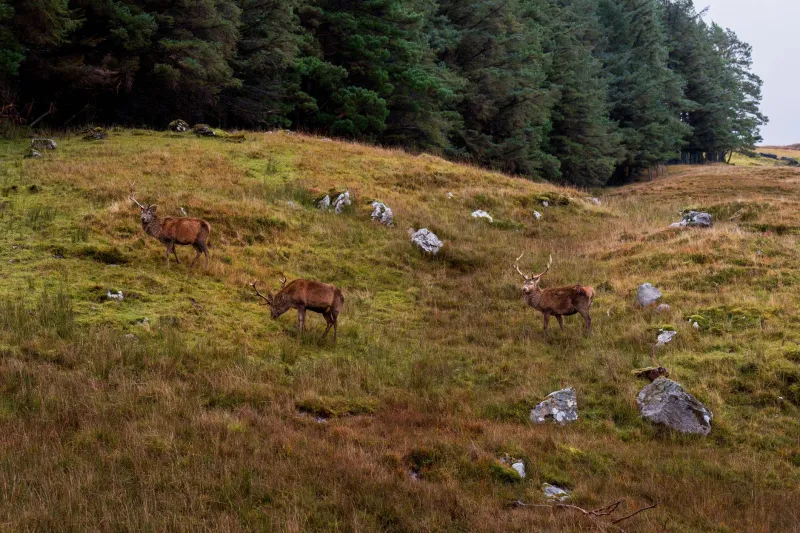
There are, depending on who you ask, somewhere between two and two-and-a-half million wild deer currently roaming Britain. That figure, which has roughly doubled since the 1990s, represents an ecological headache of the first order. Bark stripped from ancient woodland, hedgerows browsed to nothing, young tree plantings destroyed before they get a chance. For conservationists and foresters alike, deer have become the countryside's most photogenic pest.
And yet, for a growing number of estate managers, game dealers, and chefs, those same animals represent something else entirely: one of the finest, leanest, most sustainably produced proteins on the planet, available in abundance, and still — bafflingly — barely known to most British households.
A Cull That Feeds
Controlled culling is not optional. It is an ecological necessity. Without natural predators — wolves were exterminated in Britain centuries ago — deer populations must be managed by human hands. Every year, hundreds of thousands of animals are shot by trained stalkers across Scotland, England, and Wales. The question has never really been whether to cull. It has always been what happens next.
For too long, the answer was disappointing. Carcasses were sold cheaply into continental European markets — Germany in particular has long had a healthy appetite for British wild venison — while British consumers remained largely indifferent. Game dealers struggled to build consistent domestic demand. Restaurants that did put venison on the menu often found diners reluctant, put off by a vague sense that it was either too gamey, too difficult to cook, or simply too unfamiliar.
That picture is shifting, and shifting fast.
The Stalkers and the Skilled Hands
On a Highland estate in Perthshire, head stalker Callum Fraser is up before dawn most mornings from August through February. His territory covers several thousand acres of mixed woodland and open hillside, and his job is both ancient and intensely practical. He knows individual glens, reads wind direction instinctively, and understands the deer on his ground the way a shepherd knows his flock.
What has changed in recent years is what happens after the shot. "We used to get the beast to the larder and that was more or less our job done," Fraser explains, pulling on his coat in the pre-light chill. "Now we're thinking about the whole chain. How it's hung, how it's handled, who it goes to. There's a lot more pride in it."
That pride is increasingly connected to a revival in traditional butchery skills. A new generation of game handlers and independent butchers are learning cuts that had largely fallen out of practice — the haunch prepared for slow roasting, the saddle left on the bone, the trim worked into sausages and faggots that would have been entirely familiar to a Victorian game cook.
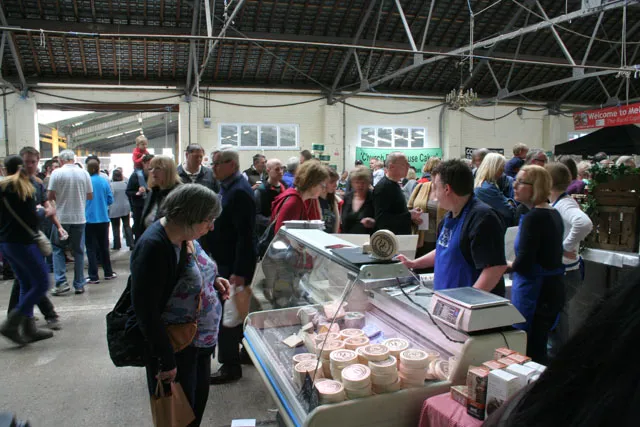
In Ludlow, long a quiet capital of British food craftsmanship, butcher James Whitmore has built a loyal following among both local customers and chefs driving from Birmingham and beyond. His hanging room holds red and roe deer from surrounding Shropshire estates, and he speaks about each species with a specificity that borders on reverence. "Roe is delicate — it doesn't need much. Fallow has more fat on it, more depth. Red deer from the hill, properly hung, is one of the great British meats. There's nothing else like it."
Chefs Who Listen to the Landscape
The restaurants leading this charge tend to share a particular philosophy: they take their cues from what's actually happening in the countryside rather than imposing a fixed menu on the seasons. At a small restaurant in the Brecon Beacons, the venison on the menu changes not just by season but by species and source. The chef, who trained under several of the country's more quietly influential game cooks, describes her approach as "reading what the land is offering."
"Wild venison is a genuinely seasonal product," she says, trimming a loin with practised efficiency. "The flavour changes depending on what the animal has been eating, where it's been living, how old it was. You can't treat it like a commodity. You have to treat it like what it is — a wild thing."
That wildness, paradoxically, is exactly what makes venison so appealing to diners who have grown weary of intensively farmed meat. It is free-range by definition. It has eaten what it chose to eat. It has lived a full life. The carbon footprint of a stalked wild deer is a fraction of that associated with reared livestock. For food-conscious diners, the ethical case is almost embarrassingly straightforward.
The Missing Middle: Getting Venison into More Homes
For all the progress in restaurants and specialist butchers, wild venison remains stubbornly absent from most British kitchen tables. Supermarkets stock it occasionally — usually farmed fallow deer in plastic trays — but the wild stuff rarely makes it past the game dealer and into everyday retail.
Part of the problem is infrastructure. Wild venison supply is inherently variable and geographically dispersed. Building reliable supply chains from hundreds of individual estates to retail shelves is genuinely difficult. But part of the problem is also cultural: British households simply have not grown up cooking game, and without that familiarity, the confidence to buy a haunch and do something worthwhile with it remains elusive.
A number of independent game dealers are working on this directly, offering subscription boxes, recipe cards, and — increasingly — online video guides to demystify the cooking. The message is consistent: venison is forgiving, versatile, and far less intimidating than people assume. A shoulder, slow-cooked with juniper and root vegetables, requires no particular skill. A steak from the loin, seasoned simply and cooked quickly over high heat, is arguably easier to get right than beef.
Tradition as the Answer
What strikes you, speaking to everyone along this chain — from the stalker on the hill to the chef plating the dish — is how often they reach for the word "traditional." Not in a nostalgic or backward-looking sense, but as a practical argument. Britain has centuries of knowledge about how to hunt, handle, and cook wild deer. That knowledge was never lost entirely. It was simply set aside, crowded out by cheaper, more convenient alternatives.
The current abundance of deer in our countryside is, in one sense, an inconvenient symptom of ecological imbalance. But it is also an opportunity — to revive a food culture, to support rural livelihoods, to put genuinely wild, genuinely British meat back on the national table. The paradox, as it turns out, resolves itself rather neatly. Britain has too many deer. Britain should be eating a great deal more venison. These two facts are not in tension. They are, in fact, the same fact.