Five Rivers, Five Flavours: The Wild Brown Trout Waters That Define British Cooking
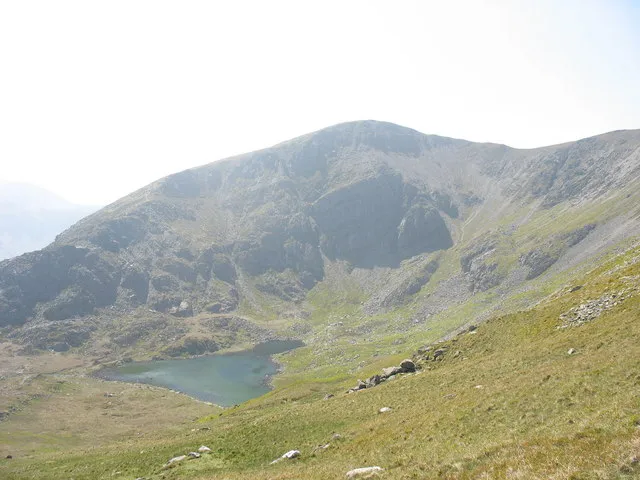
Photo: Eric Jones, CC BY-SA 2.0, via Wikimedia Commons
Salmon gets the headlines. It always has. The salmon is the celebrity of British rivers — dramatic, migratory, fought over by generations of poets, painters, and landowners with more money than sense. But ask a ghillie, a riverkeeper, or a cook who actually knows their fish, and a different name comes up again and again.
The wild brown trout.
Unlike the salmon, the brown trout rarely leaves its home water. It is shaped, over generations, by the specific chemistry of the river it inhabits — the mineral content, the temperature, the invertebrate life, the very quality of the light filtering through the bankside trees. A brown trout from a Hampshire chalk stream and a brown trout from a Highland burn are the same species in the same way that a Bordeaux and a Burgundy are both red wine. The label tells you almost nothing. The glass tells you everything.
What follows is not a fishing guide. It is a food map — five rivers where the wild brown trout remains part of a living culinary culture, and where eating one, within sight of the water it came from, is among the most irreplaceable experiences British food can offer.
1. The Test, Hampshire: Chalk and Clarity
The River Test is probably the most famous trout river in the world, and it has the reputation to match — manicured, expensive, and fiercely protected by the fishing syndicates and estates that control its banks. But beneath the intimidating reputation lies a genuine food story.
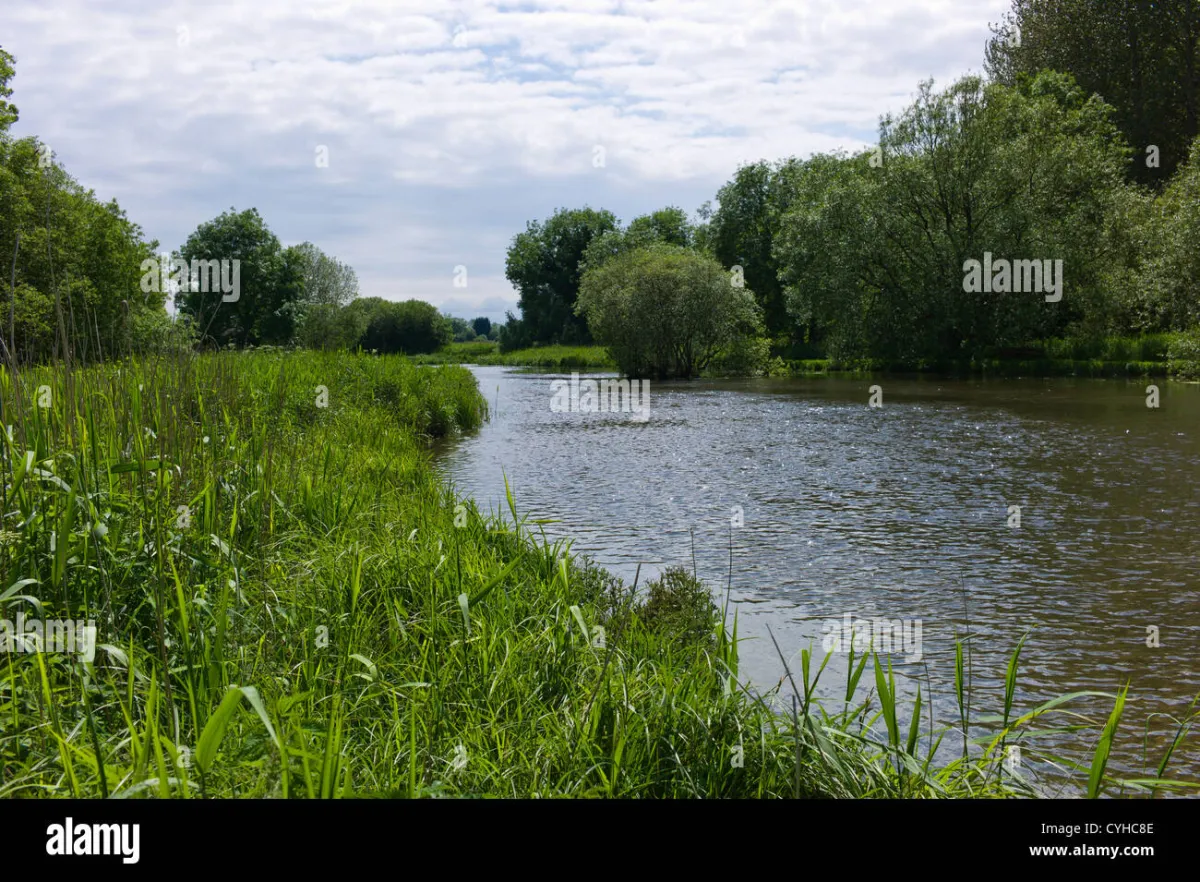 Photo: The River Test, via c8.alamy.com
Chalk streams are extraordinary environments. Fed by groundwater filtered through miles of chalk downland, the Test runs at a near-constant temperature year-round, crystal clear and rich in the calcium and minerals that support exceptional invertebrate life. The water crowfoot that trails in the current, the clouds of olive flies hatching on a May evening, the shrimp and snail populations that carpet the gravel beds — all of this feeds a brown trout population of remarkable quality.
Test trout are firm-fleshed, pale-pink, and clean-tasting in a way that reflects the water's purity. Local cooks have always kept the preparation simple — pan-fried in butter with a few leaves of watercress from the river margins, or cold with mayonnaise and cucumber on a summer afternoon. The fish needs nothing more. Adding anything elaborate would be like painting over a watercolour.
"You don't cook a Test trout," says one riverkeeper who has managed a stretch near Stockbridge for over two decades. "You warm it through and get out of the way."
2. The Usk, South Wales: Dark Water, Deep Flavour
The Usk runs from the Brecon Beacons to the Severn estuary, passing through some of the most quietly beautiful farmland in Wales. It is a spate river — subject to sudden rises and falls after rain — and its character shifts dramatically with the seasons. In summer it can be gin-clear and low, the trout visible and wary on the gravel runs. After autumn rain it turns the colour of strong tea, carrying peat from the uplands and running fast and full.
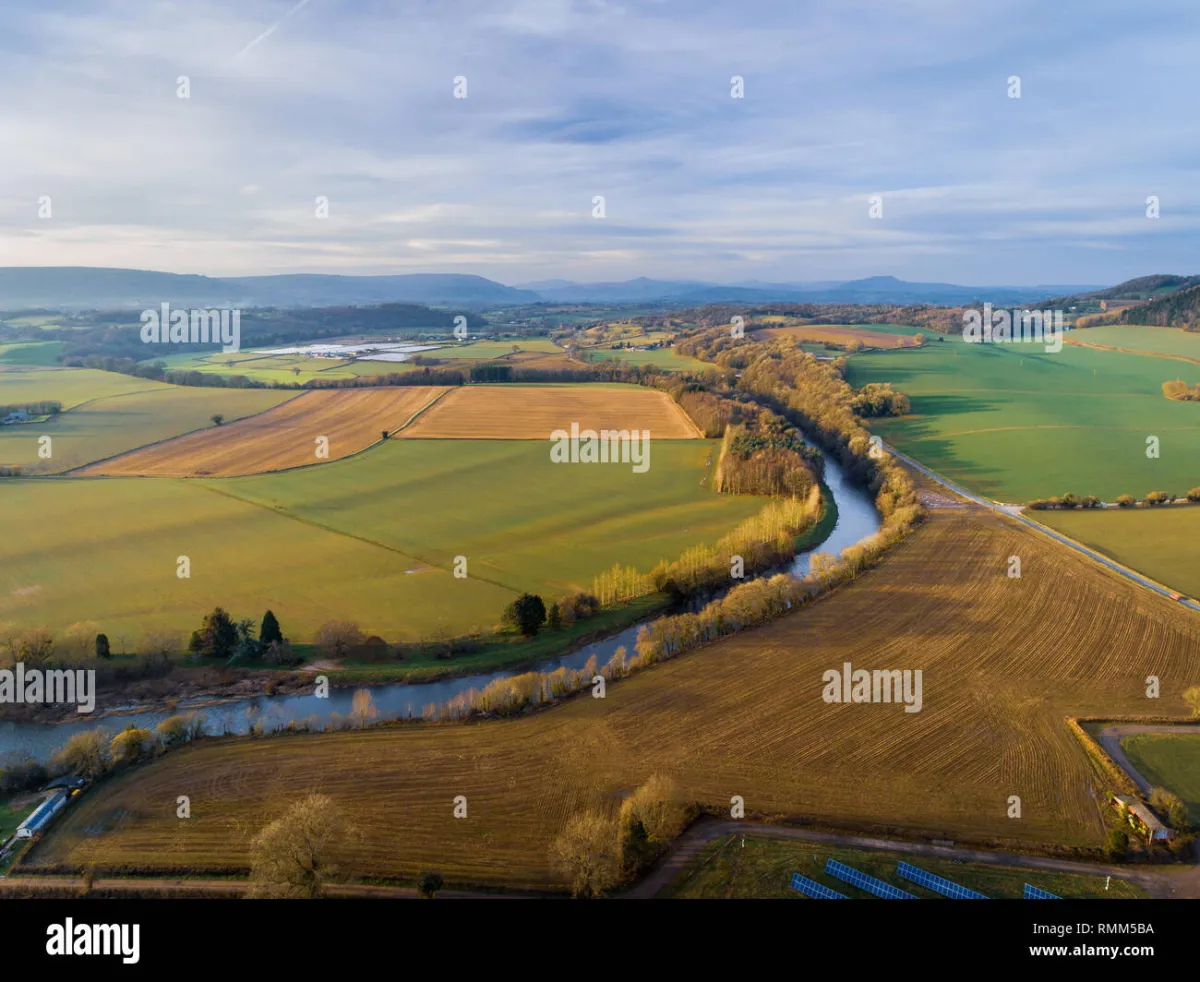 Photo: The Usk, via c8.alamy.com
Usk brown trout reflect this variability. They are darker-backed than chalk stream fish, with a richer, more complex flavour that some describe as carrying a faint mineral edge — a quality attributed by local anglers to the river's geology and the diversity of its invertebrate food. They are not a delicate fish. They are a robust one, suited to more assertive cooking.
The traditional Welsh approach is to cook them over an open fire or on a griddle, sometimes with a smear of laverbread — the seaweed preparation that is one of Wales's most distinctive culinary contributions — on the side. The combination of the river fish and the coastal vegetable, brought together on a Welsh farmhouse table, is one of those quietly regional pairings that deserves to be far better known.
3. The Itchen, Hampshire: A Second Chalk Stream Story
The Itchen runs roughly parallel to the Test, and the two rivers share a geology and a character — but the Itchen has its own distinct personality, and its own culinary tradition. Where the Test is associated with the grand fishing estates of the Test Valley, the Itchen runs through Winchester, connecting the chalk stream world to the old cathedral city and the market culture that once surrounded it.
Historically, Itchen trout fed the city. Fishmongers on the High Street sold river fish alongside sea fish from the coast. College kitchens at Winchester took trout from the college water. This urban-rural connection gave the Itchen's food culture a slightly different character — less aristocratic than the Test, more civic, more tied to the rhythms of a working town.
Modern Itchen trout still carry that quality. Local restaurants in Winchester that bother to source properly — and some do — will tell you that an Itchen fish, simply grilled and served with local watercress, is worth travelling for. The watercress beds of the Itchen valley are themselves a piece of culinary heritage, fed by the same chalk aquifer that feeds the river, and the pairing of the two is as natural as anything in British food.
4. The Tummel, Perthshire: Highland Amber
Move north of the Highland line and the brown trout world changes entirely. The Tummel and its associated lochs — Rannoch, Tummel, Faskally — form part of one of Scotland's great Highland water systems, and the brown trout here are a different creature from their southern cousins. They live in colder, more acidic water, with less food and more space, and they grow more slowly. What they lack in size they make up for in character.
Highland brown trout have orange-red flesh — the result of a diet rich in freshwater crustaceans — and a flavour that is markedly more pronounced than chalk stream fish. Some find them gamier; others simply describe them as tasting more intensely of themselves. They are not a fish for timid cooking. A Highland ghillie who has been guiding on the Tummel for thirty years puts it plainly: "You want butter, you want heat, and you want to eat them the same day. They don't improve with keeping."
The tradition here is to cook them at the waterside, over a spirit stove or a small fire, with nothing more than salt and butter. This is not a poverty of imagination. It is the confidence of people who understand that the landscape has already done the work, and the cook's job is simply not to undo it.
5. The Naver, Sutherland: The Edge of the World
The Naver rises in the Flow Country — the vast, flat peatland of northern Sutherland that is among the most ecologically significant landscapes in Europe — and flows north to the sea at Bettyhill. It is a remote river, accessible only to those willing to make the journey, and the brown trout it holds are among the most characterful in Britain.
 Photo: The Naver, via www.interad.com
Naver trout live in water the colour of dark amber, stained by peat, low in nutrients, and cold for most of the year. They are small fish by southern standards — a pound is a good one — but their flavour is extraordinary: deeply savoury, complex, with a richness that seems improbable given the austerity of their environment. Locals attribute this to the peat itself, which imparts something to the water that no analysis has ever quite captured.
There are no restaurants near the Naver. The nearest town of any size is miles away. The culinary tradition here is entirely domestic — fish caught, cleaned at the river, and cooked that evening in a farmhouse kitchen with whatever is to hand. Oatmeal, butter, and a cast-iron pan are the usual tools. The result is one of those meals that is impossible to reproduce in a city kitchen, not because of any technical difficulty, but because the fish carries the place within it, and the place cannot be packaged or posted.
That, in the end, is the point. The wild brown trout is Britain's most local food — not local in the fashionable, marketing-department sense of the word, but genuinely, irreducibly specific to a stretch of water, a geology, a season, and a community. To eat one properly is to eat a river. And there is nothing quite like it.