Milk, Breed, and Place: The Five British Cheeses That Could Not Exist Without Their Animals
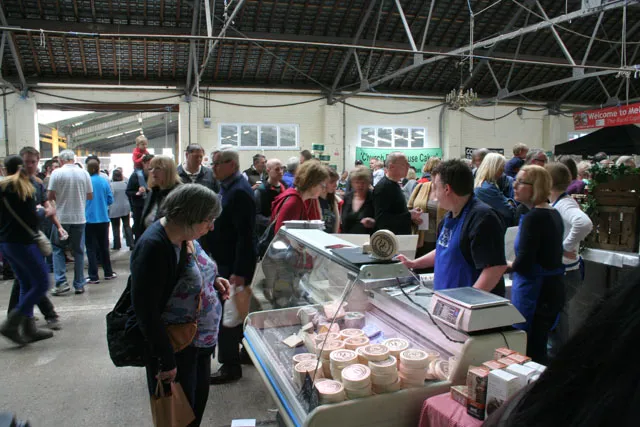
Photo: Kate Jewell , CC BY-SA 2.0, via Wikimedia Commons
Ask a serious cheesemaker what their most important ingredient is and you'll rarely hear them say "milk" without immediately qualifying it. Whose milk. From what breed. Eating what. At what time of year. The best British cheeses are not simply dairy products dressed up in regional branding — they are the edible expression of a specific relationship between an animal, a landscape, and the people who have tended both, sometimes for centuries.
That relationship is under pressure almost everywhere you look. Rare breeds are expensive to keep, slow to mature, and difficult to justify against the relentless productivity of commercial dairy herds. The economics are brutal, and more than a few of the pairings described here exist because a handful of stubborn, passionate individuals have refused to let them disappear. What follows is a celebration — but also something of an urgent inventory.
1. Double Gloucester and the Old Gloucester Cow
The Old Gloucester is one of Britain's most endangered native cattle breeds, a deep mahogany animal with a distinctive white finching stripe along its back and a temperament that old farming manuals describe, with some understatement, as "independent." At its peak in the eighteenth century, the breed dominated the Vale of Gloucester and produced the milk that made the county's cheese famous across England. By the 1970s, the breed had been reduced to a single surviving herd.
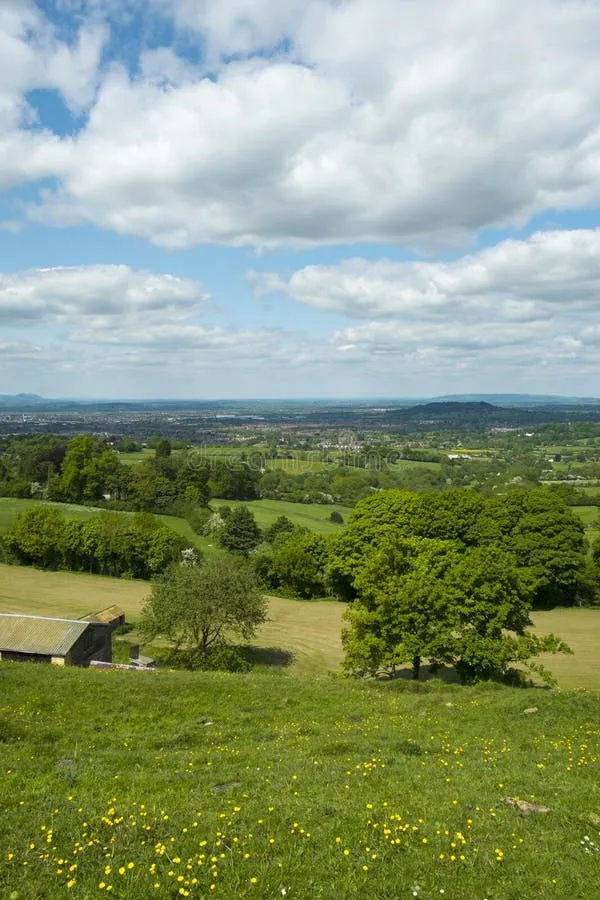 Photo: Vale of Gloucester, via thumbs.dreamstime.com
The milk is the reason this matters. Old Gloucester cows produce relatively small quantities, but what they give is extraordinarily rich in a particular protein structure that gives Double Gloucester its characteristic dense, slightly waxy paste and its long, savoury finish. Modern Double Gloucester — the orange-dyed supermarket variety — is made from Holstein milk and bears only a passing resemblance to the genuine article.
A handful of dairies in Gloucestershire, including the Gloucestershire Cheese Company at Smart's Farm, are now making authentic Double Gloucester from Old Gloucester milk. The difference is immediately apparent to anyone who tastes them side by side: a depth of flavour, a faintly grassy sweetness, and a texture that holds together on the knife in a way that the commercial version simply doesn't manage. The breed's recovery is ongoing, but it remains precarious. Without the cheese, there is little economic argument for keeping the cattle. Without the cattle, the cheese ceases to exist in any meaningful sense.
2. Swaledale and the Dalesbred Ewe
The Yorkshire Dales produce some of Britain's finest sheep's milk cheeses, and none is more firmly rooted in its landscape than Swaledale. The Dalesbred ewe — a compact, hardy, black-faced hill breed adapted to the high moorland grazings of the northern Dales — produces milk that reflects the extraordinary botanical diversity of the traditional hay meadows and limestone pastures she works across from spring through autumn.
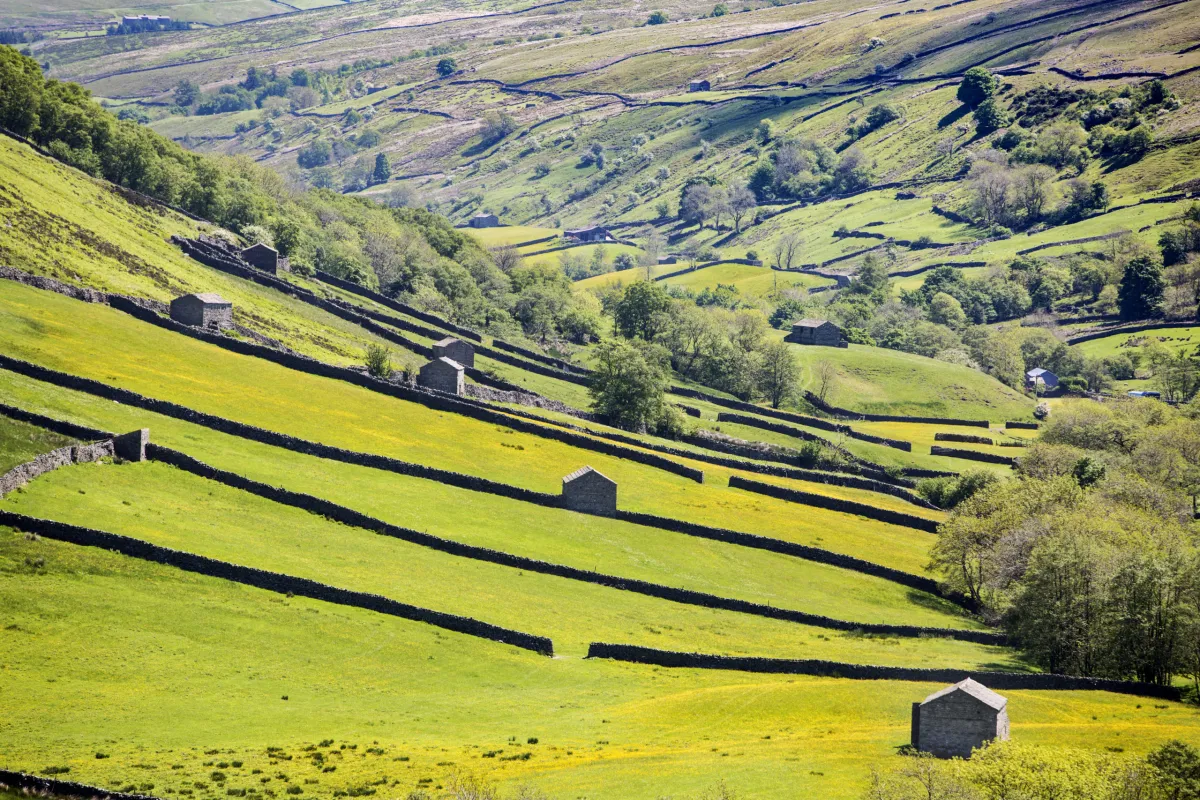 Photo: Yorkshire Dales, via www.yorkshiredales.org.uk
The cheese is white, slightly crumbly, and carries a clean, lactic sharpness with a background note that experienced tasters describe as "moorland" — a faint, almost peaty quality that no lowland milk can reproduce. It is a flavour that comes directly from the plants the ewes eat: the wild thyme, bird's-foot trefoil, and Yorkshire fog grass that persist on unimproved upland ground.
The Swaledale Cheese Company in Richmond holds the protected designation of origin for the name, and their commitment to sourcing from local flocks keeps the breed-pasture-cheese connection alive. But the pressures on traditional Dales farming are real, and the unimproved meadows that give the milk its character are themselves threatened by agricultural change.
3. Single Gloucester and the Gloucester Old Spot Pig
This one requires a small clarification, because the connection here is lateral rather than direct. Single Gloucester, the lighter, younger sibling of Double Gloucester, was traditionally made alongside the pig-rearing culture of the Gloucester dairy farm. The whey from Single Gloucester production fed the Gloucester Old Spot pigs that were kept on virtually every farm in the county — and those pigs, in turn, grazed the orchards and woodland edges that influenced the pasture quality and, by extension, the milk.
It is a circular economy in the truest sense, and it produced both a distinctive cheese and a distinctive pig breed. Today, cheesemakers like Charles Martell at Laurel Farm, who also breeds Old Spots, are consciously reviving this whole-farm model. The cheese benefits from the ecological richness that diverse, traditional farming creates; the pigs provide an outlet for the whey that makes the whole system financially viable. Neither element works as well in isolation.
4. Beenleigh Blue and the British Friesland Ewe
Beenleigh Blue, made by Ticklemore Cheese in Devon, is one of the few raw sheep's milk blues produced in England, and it depends on the British Friesland — a breed selected specifically for its milk yield and the particular fat and protein content of that milk. Sheep's milk is naturally richer in fat and solids than cow's milk, and it gives Beenleigh its characteristic dense, creamy paste and the complex, almost honeyed sweetness that underpins the blue veining's sharpness.
The British Friesland is not a rare breed in the way that the Old Gloucester is, but the commitment to raw milk production and the seasonal nature of sheep's milk — ewes are typically milked for a limited window from spring to autumn — places significant constraints on production. Beenleigh Blue is a cheese of genuine scarcity, and that scarcity is inseparable from the biology of the animal that makes it possible.
5. Hereford Hop and the Hereford Cow
The Hereford Hop is a washed-rind cheese from the Welsh Marches, made by Monkland Cheese Dairy in Herefordshire, and it relies on the milk of Hereford cattle — the great red-and-white breed that has shaped the landscape and agricultural identity of the border country for three centuries. Hereford milk is notably rich and carries a mild, buttery sweetness that the washed-rind process transforms into something far more complex: a sticky, orange-rinded cheese with an interior that is supple, almost yielding, and carries notes of hay, brine, and warm yeast.
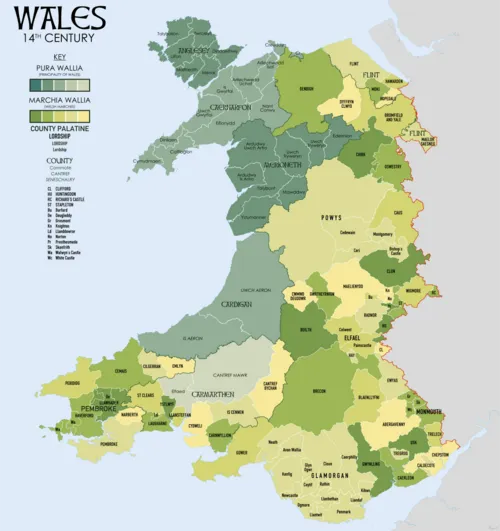 Photo: Welsh Marches, via upload.wikimedia.org
The Hereford cow is not endangered, but the use of breed-specific milk in artisan cheesemaking is far from guaranteed. As dairy herds consolidate and pooled milk becomes the norm, the distinctiveness that comes from a single breed eating a single landscape is increasingly hard to preserve. Monkland's commitment to sourcing locally is what keeps the Hereford Hop genuinely Herefordshire in character rather than merely in name.
Why Any of This Matters
The argument for preserving these breed-and-cheese pairings is not purely sentimental, though sentiment is entirely justified. It is an argument about flavour, about biodiversity, and about what we lose when we allow agricultural homogenisation to continue unchallenged. Every one of these cheeses tastes the way it does because of decisions made over generations — about which animals to keep, which pastures to maintain, which traditional methods to persist with in the face of more profitable alternatives.
That is, in the end, what terroir actually means: not a marketing concept, but a record of accumulated choices. Buy these cheeses when you find them. Ask where the milk came from. And consider that the animal behind the answer is, in many cases, more important than anything else on the label.