Salt, Time, and Terroir: The British Farmers Curing Their Own Meat and Changing the Map

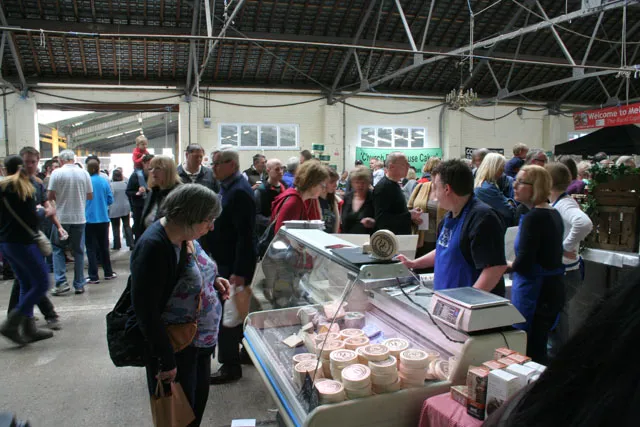
Photo by Photo by Steve Parfitt on Unsplash on Unsplash
On a fell farm above Coniston, in a stone outbuilding that has stood for the better part of two centuries, legs of Herdwick mutton are hanging in the cool October air. They've been rubbed with salt, mountain thyme, and a little juniper — all gathered from the fell above — and they'll hang for the better part of three months before anyone takes a knife to them. The farmer who put them there is the same man who raised the sheep, managed the fell, and made the decisions about when and how each animal was finished. From birth to bresaola, nothing has left his hands.
This is not a chef's project. It's not a food entrepreneur's side hustle. It's a farmer doing what farmers across southern Europe have done for centuries — using salt and time and cold air to turn good meat into something even better, and in the process, adding value to a business that the economics of conventional livestock farming have made increasingly precarious.
The Vertical Turn
The phrase the agricultural world keeps reaching for is "vertical integration" — the idea that a farm can and should capture more of the value chain that its animals pass through. For most of British farming history, that chain has been long and diffuse: livestock leaves the farm, passes through a market, goes to an abattoir, gets broken down by a wholesaler, and eventually reaches the consumer in a form that bears little visible relationship to the field it came from.
The farmer at the bottom of that chain has typically captured the smallest share of the final price. The curing movement represents one answer to that problem — and it's an answer with deep historical roots.
Before refrigeration, before the industrialisation of the food chain, curing was simply what you did with surplus meat. Every farm that raised pigs had a curing shed. Every upland farm that ran sheep knew how to salt a leg for winter. The knowledge was ordinary, practical, and widespread. It was also, over the course of the twentieth century, almost entirely lost as commercial production took over.
What's happening now is something more deliberate than a simple revival. Farmers who are choosing to cure their own meat are doing so with an awareness of both the culinary tradition they're drawing on and the commercial opportunity they're pursuing. They're researching techniques, connecting with each other through informal networks, and in some cases travelling to Italy, Spain, or the Basque Country to understand how those traditions have been maintained and developed.
Herdwick, Dexter, and the Question of Breed
Breed is central to this story in a way that it simply isn't in conventional charcuterie. When a Lake District farmer cures Herdwick mutton, the specific character of that animal — its age, its diet of fell grasses and heather, the particular fat distribution that comes from a life spent walking steep ground — is baked into the final product. You cannot replicate it with a different breed raised on lowland grass. The cured meat is, in a meaningful sense, a product of the fell.
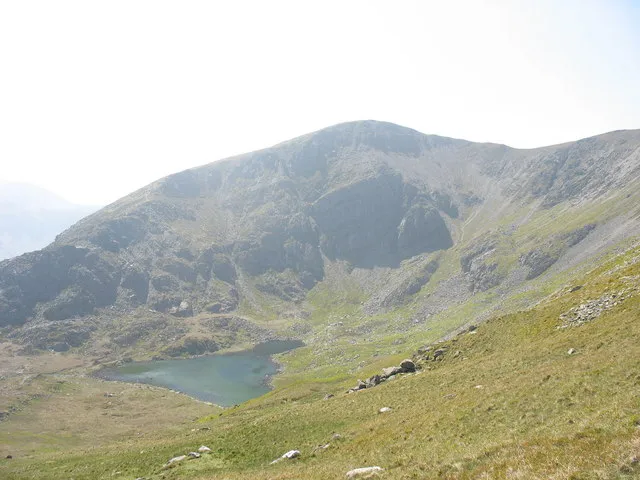
 Photo: Lake District, via www.tripsavvy.com
The same logic applies to the air-dried Dexter beef being produced on farms across the Welsh Marches and the Herefordshire borders. Dexter cattle are a small, hardy native breed with a high proportion of intramuscular fat and a flavour that reflects their typically extensive grazing systems. Cured and air-dried, that fat renders slowly during the drying process, concentrating flavour in ways that breeds selected for rapid commercial growth simply don't achieve.
There's a similar story to be told about Oxford Sandy and Black pigs on the Oxfordshire clay, about Tamworths in the Midland forests, about Soay sheep on the Scottish islands. Each of these breeds has a flavour profile shaped by centuries of adaptation to a specific landscape, and that profile becomes the foundation of a cured product that could only have come from that place.
The Curing Shed as Economic Lifeline
For many of the farmers involved, the decision to start curing wasn't primarily philosophical. It was financial. Margins on live animals sold through conventional channels are thin and getting thinner. The processing step — the curing shed, the hanging room, the label on the finished product — is where value is created and, crucially, where it can be retained on the farm.
The economics of small-batch curing are not straightforward. The capital investment in a properly ventilated, temperature-controlled curing room is significant. The time required — months, in the case of air-dried products — ties up cash and requires careful planning around cash flow. Regulatory compliance, while manageable, adds complexity.
But for farms that can navigate these challenges, the returns are transformative. A leg of Herdwick mutton that might fetch a few pounds through a conventional livestock market can, as a finished bresaola, command ten or fifteen times that figure. More importantly, the farmer knows exactly who has bought it and why. The relationship with the customer is direct, personal, and built on a shared understanding of where the product came from.
Is Britain Ready for Its Own Curing Culture?
The question that hovers over all of this is whether Britain can develop a curing tradition that is genuinely regional and terroir-driven — comparable, in its own way, to the great curing cultures of Parma, the Ardèche, or the Basque mountains.
The honest answer is: not yet, but the foundations are being laid. What's currently happening is scattered and improvised. There is no British equivalent of the controlled designation systems that protect Jamón Ibérico or Prosciutto di Parma. There is no established vocabulary for talking about the regional character of British cured meat in the way that wine lovers talk about appellations.
But the raw materials are extraordinary. Britain's upland breeds are among the most distinctive in the world. Its landscapes — the fells, the moors, the river valleys, the saltmarshes — produce animals with genuinely unusual flavour profiles. And the farmers now choosing to cure on-site are, in their different ways, beginning to articulate what makes their particular product different from everything else.
That articulation takes time. The great curing traditions of Europe were built over centuries, through accumulated knowledge, cultural pride, and the slow development of shared standards. Britain's tradition was interrupted rather than never begun — and the farmers rebuilding it today are working with something real.
The bresaola hanging in that Coniston outbuilding is not an imitation of anything Italian. It's a Herdwick, from a specific fell, cured by a specific farmer, in a specific stone building with a specific draught through its vents. It tastes like nowhere else. That, in the end, is the whole point.