Salt Air and Thin Soil: The Hebridean Crofters Quietly Feeding Scotland's Finest Kitchens

Salt Air and Thin Soil: The Hebridean Crofters Quietly Feeding Scotland's Finest Kitchens
The wind off the Atlantic doesn't ask permission. It arrives on the Western Isles with a kind of indifferent authority, bending the grass flat, salting everything within reach, and reminding anyone who tries to grow food here that the land has always set the terms. Crofting in the Outer Hebrides has never been easy. It was never meant to be easy. What it has always been is specific — rooted in a particular relationship between a particular people and a particular stretch of difficult, beautiful, utterly uncompromising ground.
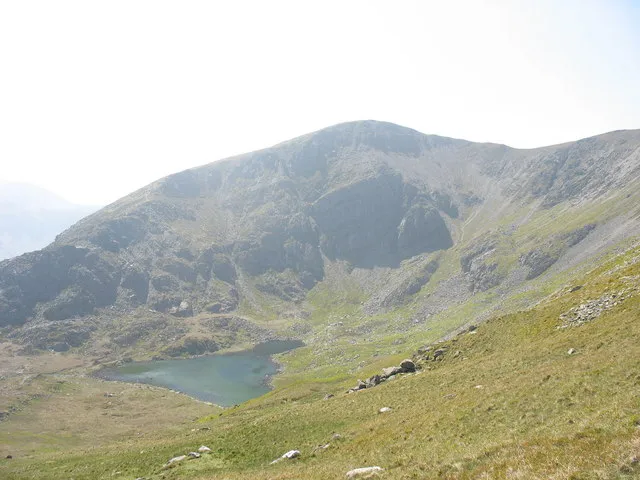
 Photo: Outer Hebrides, via www.brightwaterholidays.com
That specificity, it turns out, is exactly what a certain kind of restaurant now finds irresistible.
Across Lewis, Harris, and the Uists, a small but growing number of crofters are discovering that the things which make their land hard — the salt exposure, the thin acid soils, the relentless coastal weather — are also the things that make what grows there taste unlike anything produced anywhere else in Britain. Sea vegetables foraged from the tidal margins. Heritage root crops that have been quietly adapted to Atlantic conditions over generations. Coastal herbs so concentrated by wind and salt that a small handful will do the work of a fistful of their supermarket equivalents.
Chefs are paying attention. The question is whether that attention is a lifeline or a complication.
What the Croft Produces
To visit a working Hebridean croft in late summer is to encounter a kind of ordered wildness. The cultivated ground is modest — a few raised beds, perhaps a polytunnel battling heroically against the elements, a patch of kale that has survived everything the Atlantic could throw at it. But the margins are where things get interesting.
On the tidal rocks below one Lewis croft, the owner — a woman in her early forties who returned to the island a decade ago after years working in horticulture on the mainland — is harvesting sea purslane with the calm efficiency of someone who knows exactly where to look and when. "The restaurants want consistency," she says, filling a wooden crate with the fleshy, salt-bright leaves. "That's the tension. The tides don't do consistency. The seasons don't do consistency. You work with what's there."
Her croft supplies two Edinburgh restaurants and one in Glasgow with a rotating selection of coastal produce — sea purslane, rock samphire, sea beet, and a variety of dulse that she harvests from a specific stretch of shore where the water runs particularly clear. She has also begun cultivating neeps and carrots in the croft's more sheltered ground, selecting for varieties that have historically done well in island conditions. The flavour, she insists, is not comparable to anything grown further south. "The cold slows everything down. The sugars concentrate. It's the same reason Hebridean lamb tastes the way it does."
The Crofting System: Protection and Constraint
The legal framework governing crofting is one of the most distinctive features of Highland and Island land tenure, and it shapes everything about how this kind of small-scale production works. Crofters have security of tenure and the right to assign their croft within the family, but the land cannot be freely sold or developed. Common grazings — the shared ground that adjoins most crofting townships — add another layer of communal obligation and right.
For the crofters now supplying restaurants, this system is both a protection and a complication. The security of tenure means they cannot be easily removed by landlords responding to market pressure, which matters enormously when you are trying to build a long-term growing enterprise on marginal land. But the restrictions on what can be done with croft land also limit the scale and nature of any commercial operation. You cannot simply expand a polytunnel operation into a full commercial nursery without navigating a thicket of crofting law.
"The system wasn't designed for what we're doing," admits one North Uist crofter who has been growing heritage varieties of sea kale and coastal herbs for several years. "But it wasn't designed against it either. You learn to work within it. And honestly, the constraints are part of what keeps this real. If it were easier to scale up, it would stop being a croft and start being something else."
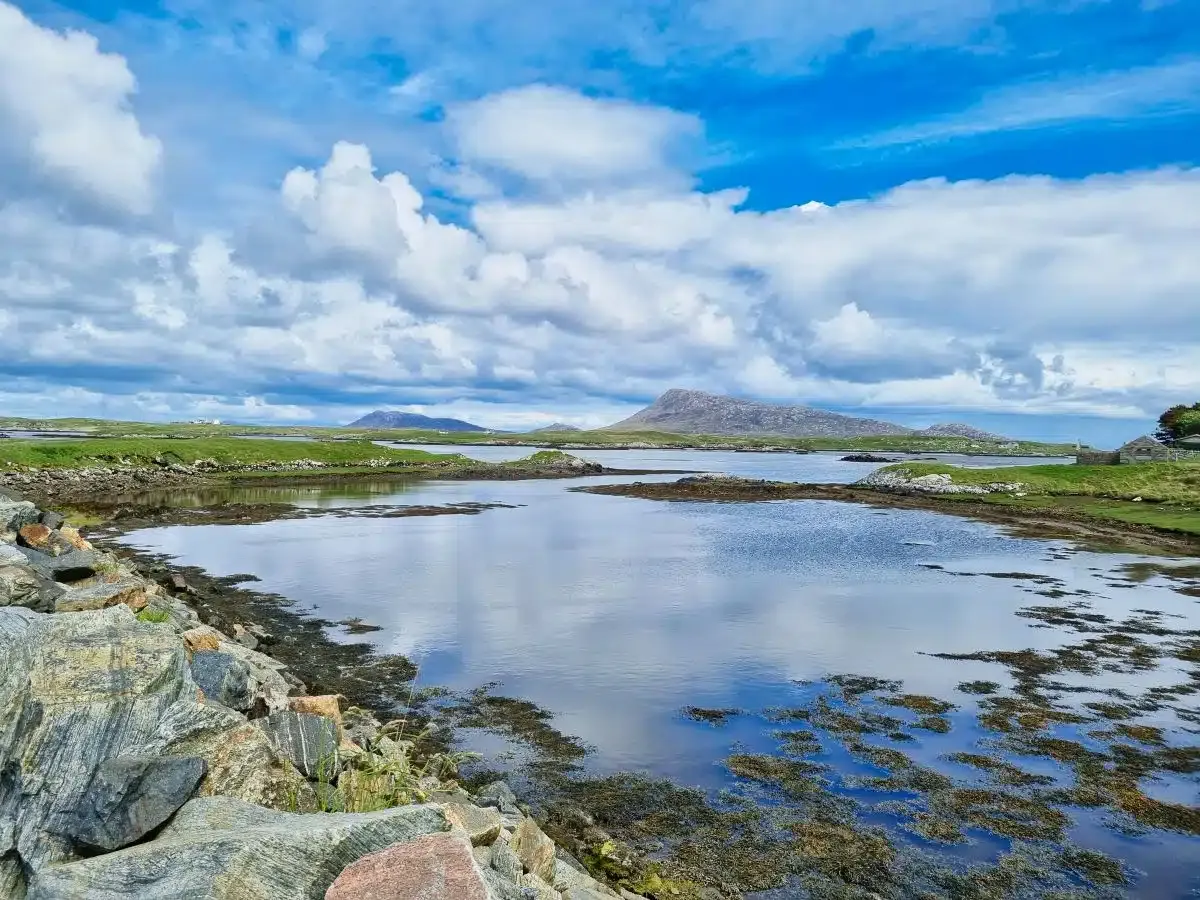 Photo: North Uist, via outaboutscotland.com
That something else — the commodification of subsistence culture, the transformation of a way of life into an artisan brand — is a concern that surfaces repeatedly in conversations with Hebridean growers. Several are uncomfortable with the language of the restaurant industry: the talk of provenance and terroir and hyper-local sourcing, which can feel, from the island end of the supply chain, like a metropolitan narrative being imposed on a reality that is considerably more complicated.
The Restaurant Relationship
For the chefs involved, the appeal of Hebridean produce is straightforward enough. In an era when restaurant menus compete partly on the distinctiveness of their ingredients, a sea vegetable harvested from a named stretch of Atlantic coastline by a named crofter represents exactly the kind of story that diners and critics respond to. The flavour is real, the provenance is unimpeachable, and the narrative writes itself.
But the commercial reality is harder. Hebridean crofters cannot guarantee volume. They cannot always guarantee timing. The ferry from the Outer Isles runs when the weather allows. A restaurant that has built a dish around a specific ingredient needs that ingredient to arrive on a Tuesday, not whenever the Atlantic decides to cooperate.
Some chefs have adapted their working methods accordingly, designing menus around what is available rather than specifying what they need. This requires a particular kind of culinary confidence — a willingness to let the ingredient lead rather than the concept. It also requires a relationship with the grower that goes beyond a simple commercial transaction.
"I talk to her every week," says one Edinburgh chef, referring to his Lewis supplier. "Sometimes there's nothing. Sometimes there's more than I can use. You build the season around the relationship, not the other way around. It changes how you cook."
A Sustainable Future or a Fashionable Moment?
The honest answer to the question of whether fine dining can genuinely sustain Hebridean crofting communities is: possibly, for some, in some circumstances, but not as a general solution to the economic pressures facing island life.
The crofters who are making it work are, without exception, people who would be crofting regardless — people for whom the land and the community come first, and the restaurant income is a welcome addition rather than the entire economic rationale. For them, the current interest from the food world is genuinely helpful. It provides income that supplements the traditional mix of livestock, seasonal work, and whatever else island life requires.
But it would be naive to imagine that a handful of Edinburgh restaurants can underwrite the future of Hebridean crofting culture. The challenges facing the Western Isles — depopulation, the housing crisis, the cost of living on remote islands, the decline of Gaelic — are structural, not culinary. A beautiful plate of sea purslane, however lovingly grown and honestly sourced, cannot fix any of that.
What it can do is remind people, both on and off the islands, that this culture exists, that it produces something genuinely irreplaceable, and that it is worth caring about. Sometimes that reminder is enough to matter. On the Atlantic edge of Britain, where the wind doesn't ask permission and the soil has always set the terms, small things have always had to be enough.