The Rivers That Remember: Scotland's Spate Salmon Country Fights for Its Future
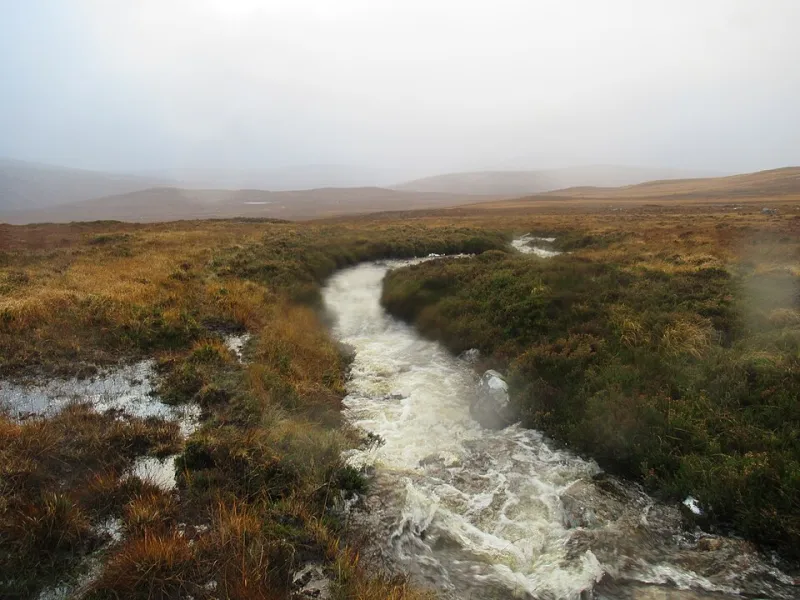
Photo: ian shiell , CC BY-SA 2.0, via Wikimedia Commons
The Rivers That Remember: Scotland's Spate Salmon Country Fights for Its Future
Donald MacAulay is seventy-one years old and has spent the better part of five decades walking the same mile of riverbank in Sutherland. He knows every pool by name — some of those names stretching back into Gaelic, their origins lost even to the oldest people in the glen. He knows which boulders the fish hold behind in a flood, which gravel runs they favour for spawning, which overhanging birch roots shelter the parr in summer. What he doesn't know anymore, and what troubles him deeply, is whether any of this knowledge will still matter in twenty years.
'I counted seven fish on this beat last October,' he says, pausing on the bank of a river so small you could leap it in places. 'Thirty years ago, I wouldn't have bothered counting. You just assumed they were there.'
What a Spate River Is — and Why It Matters
Most people, when they think of Scottish salmon rivers, picture the Tay or the Spey — broad, famous, expensive to fish, and backed by centuries of sporting tradition. But Scotland's spate rivers are something else entirely. Small, peaty, rain-fed streams that rise quickly after storms and drop just as fast, they once provided the majority of wild Atlantic salmon spawning habitat across the Highlands and Islands. When the spate came — usually in September and October — the fish poured in from the sea in their thousands, pushing up through pools and riffles to the same gravel beds their ancestors had used for thousands of years.
For the communities living in the glens through which these rivers ran, the salmon wasn't just a fish. It was a calendar. It marked the turn of the season, provided a vital source of protein before winter, and underpinned a whole culture of ghillies, netsmen, smokehouses, and riverside traditions that shaped daily life from August through November. The return of the salmon was, in every meaningful sense, the return of autumn itself.
Now, on dozens of these rivers, that return has slowed to a trickle. Some are recording seasons with fewer than ten fish. A handful have seen none at all.
The Pressures Bearing Down
The causes are multiple, overlapping, and fiercely debated. At sea, the salmon faces a gauntlet of challenges: warming waters, changing prey distribution, and the disputed but persistent issue of marine mortality around fish farm infrastructure. On the rivers themselves, decades of agricultural drainage, forestry planting to the water's edge, and the gradual silting of spawning gravels have degraded the habitat that returning fish depend on.
Climate change is reshaping the very nature of spate rivers. The flash floods that once brought fish surging upstream now arrive at unpredictable times, sometimes too early in the season when no fish are waiting offshore, sometimes not at all during the critical autumn window. Rivers that were reliably fishable for six weeks are now offering perhaps two, if the rain falls right.
River trusts across the Highlands are working hard, and the results in some catchments are genuinely encouraging. On the Helmsdale in Sutherland, years of gravel restoration work — physically removing the fine sediment that smothers salmon eggs — has produced measurable improvements in juvenile survival. On the Dionard in the far north-west, the removal of a long-redundant agricultural culvert opened up several kilometres of spawning habitat that fish hadn't been able to reach for a generation.
'These rivers want to recover,' says one river trust manager working across three Caithness catchments. 'They have the instinct for it. We just have to stop blocking the way.'
The Culture That Hangs in the Balance
What's harder to restore than spawning gravel is the living tradition that surrounds the fish. The ghillie's craft — reading water, understanding fish behaviour across a lifetime of seasons, passing that knowledge on to the next generation — is only sustained when there are enough fish to learn from. When the river runs empty, the knowledge erodes. The young men and women who might have become ghillies take other work. The smokehouses that once processed the autumn catch close, or pivot to farmed fish. The harvest supper that marked the end of the season quietly stops being held.
In one small glen in the Western Highlands, an elderly crofter describes a tradition his grandmother spoke of — a particular way of curing the first salmon of the season with bog myrtle and salt, wrapped in dock leaves and hung in the stone outhouse for a fortnight. Nobody in the glen makes it anymore. There haven't been enough first salmon to justify the ritual.
'It's not just the fish we're losing,' he says. 'It's everything the fish held together.'
Reasons to Keep Fighting
Despite everything, there are reasons not to despair entirely. Atlantic salmon are resilient animals with deep evolutionary roots in these rivers. Where habitat has been genuinely improved, fish have returned — sometimes with surprising speed. The river trusts, the ghillies, the crofters, and the anglers who care deeply about these waters are not giving up, and the quality of the restoration science being applied in Scotland is, by international standards, genuinely impressive.
What's needed now, the people working on these rivers will tell you, is time, money, and the political will to address the marine pressures that no amount of gravel restoration can compensate for alone. It's a big ask. But then, these are rivers that have been flowing since before anyone thought to give them names. They deserve the chance to remember what they once were.