Common Ground: The Ancient Meadow Systems Where Hay, Cattle, and Neighbours Still Work the Same Strips
Photo: Hosam Badraldin, CC BY-SA 4.0, via Wikimedia Commons
Sometime in early August, on a stretch of flood meadow beside the Thames near Oxford, a gate that has been closed since February will swing open. The cattle will walk through it, as cattle have walked through it for at least seven hundred years, and they will begin to graze the aftermath of hay that was cut from the same strips of ground by the same families — or their predecessors — a month earlier. Nobody will have planned a meeting. Nobody will have signed a new agreement. The gate simply opens, as it always has, on Lammas Day.
Lammas — the 1st of August in the old calendar, rooted in the Anglo-Saxon hlaf-maesse, the loaf mass — marked the point in the agricultural year when privately held hay strips reverted to common grazing. The meadows that operated under this system became, for the summer growing season, the exclusive concern of individual strips holders, each responsible for their own portion of the hay crop. Come Lammas, the fences came down and the whole meadow became shared ground again until the following February, when the growing season began afresh.
It is an arrangement of almost breathtaking simplicity, and it has produced, almost accidentally, some of the most botanically rich and ecologically significant grassland in lowland England.
The Strips That Survived
The open-field system that gave rise to lammas meadows was once the dominant form of agricultural organisation across medieval England. By the nineteenth century, enclosure had swept most of it away, consolidating the scattered strips of common field into the bounded, privately owned parcels that still define the English countryside today. What survived did so largely through oversight, stubbornness, or the particular legal complexity of common rights that made certain meadows practically impossible to enclose without the agreement of every rights holder — agreement that was rarely forthcoming.
Today, the most celebrated surviving lammas meadow system is at Pixey and Yarnton Meads near Oxford, where the ancient system of allocating strips by lot — the lots themselves named after long-forgotten families whose descendants may still hold them — has continued without meaningful interruption. Otmoor, also in Oxfordshire, retains elements of the old system. North Meadow at Cricklade in Wiltshire, managed by Natural England, is perhaps the most famous surviving example, home to the largest population of snakeshead fritillaries in the country.
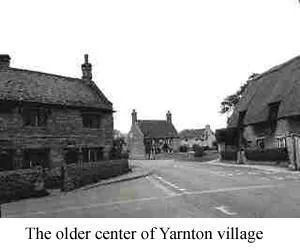 Photo: Pixey and Yarnton Meads, via www.yarnton.com
Further north, the Ings meadows of the Yorkshire Wharfe and Swale valleys contain remnant strip systems, and in the Welsh Marches, a handful of flood meadows along the Wye and its tributaries still operate under customary arrangements that echo, if not precisely replicate, the lammas model.
What the Hay Actually Tells You
The ecological argument for lammas meadows is well established in conservation circles, but it is less often connected to the agricultural and culinary story of the livestock that graze them. It should be.
The hay cut from an unimproved lammas meadow is categorically different from the ryegrass silage that dominates modern lowland farming. Walk a Cricklade meadow in June and you will find over a hundred plant species in a single field: yellow rattle, meadow buttercup, great burnet, cuckooflower, meadow foxtail, and dozens more, all flowering in a sequence that reflects a management regime unchanged for centuries. The hay that results from cutting this mixture is nutritionally complex in ways that monoculture grass simply isn't — richer in minerals, higher in varied plant compounds, slower to digest, and vastly more interesting to the livestock that eat it.
"You can taste the difference in the animals," says a beef farmer who has grazed cattle on Yarnton Mead for the past twenty years, taking on the rights from his father and grandfather before him. "The beef off these meadows has a flavour that I can't get from my other ground. People who know what they're eating notice it straight away."
The science supports this instinct. Research into the relationship between botanical diversity in pasture and the flavour compounds in meat and dairy has grown considerably in recent years, and the evidence consistently points in the same direction: more plant species means more complex fatty acid profiles, more varied volatile compounds, more of what tasters recognise as genuine flavour.
The Community That the Meadow Creates
But the lammas meadow is not merely an ecological or gastronomic curiosity. It is, at its core, a social institution — and one that has proved remarkably durable.
At Yarnton, the annual lot-drawing ceremony, in which the strips for the coming season are allocated by picking wooden balls from a bag, still draws the rights holders together each spring. The lots bear names — White, Gilbert, Rothe, Watery — that are centuries old and have no living human connection. Yet the families who hold them turn up, year after year, to participate in a ritual that binds them to the land and to each other in ways that no modern agricultural tenancy arrangement could replicate.
"It's not romantic," says one rights holder who farms a small beef herd in the village. "It's practical. We all know whose strip is whose. We all know when the gate opens. We all know the rules. It works because everyone has always followed it."
That simplicity is also its vulnerability. The system depends entirely on continuity — of knowledge, of custom, and of the agricultural community that gives it meaning. As farms consolidate and younger generations move away from the land, the informal transmission of that knowledge becomes harder to guarantee. Several smaller lammas systems have quietly collapsed in living memory, not through legal challenge or deliberate abandonment, but simply through the attrition of the people who understood how they worked.
Fighting for What Remains
Ecologists and agrarians working to protect surviving lammas meadows are increasingly aware that the conservation argument alone is insufficient. The meadows need farmers who understand them and are economically supported to work them — and that means making the case for the premium quality of the livestock and hay they produce.
Some rights holders have begun marketing their beef specifically as lammas meadow-grazed, with encouraging results at farmers' markets and through direct sales to restaurants. Others are working with conservation bodies to access agri-environment payments that recognise the ecological value of traditional management. The picture is patchy, and the economics remain difficult, but the direction of travel is at least not entirely discouraging.
What is perhaps most striking, to anyone who spends time on these meadows, is how alive they feel. Not preserved, not curated — alive. The snakeshead fritillaries at Cricklade push through the wet spring grass with the same indifference to human attention they have always shown. The cattle at Yarnton move through the aftermath in August with the unhurried confidence of animals on familiar ground. The hay, cut and turned in the summer sun, smells of something that is very difficult to name but immediately recognisable as belonging to a particular place.
These meadows are not relics. They are working landscapes, producing food of genuine quality, sustaining communities with genuine roots. The gate opens on Lammas Day, the cattle walk through, and something ancient and entirely practical continues. It would be a very particular kind of foolishness to let it stop.