Fire and Peat: Scotland's Last Smokehouse Masters Guard Britain's Forgotten Flavour
The Smoke That Time Forgot
Deep in the Cairngorms, where morning mist clings to ancient Scots pines and the air carries the earthy sweetness of decomposing heather, Malcolm MacLeod tends fires that have burned in his family for four generations. But these aren't ordinary fires—they're peat fires, banked with juniper branches and wild thyme, producing smoke that transforms ordinary pork into something approaching alchemy.
"My great-grandfather never knew he was making 'artisanal charcuterie,'" MacLeod laughs, checking the temperature in his stone smokehouse with the same brass thermometer his ancestor installed in 1923. "He was just trying to make bacon that would last through winter and taste better than anything you could buy in town."
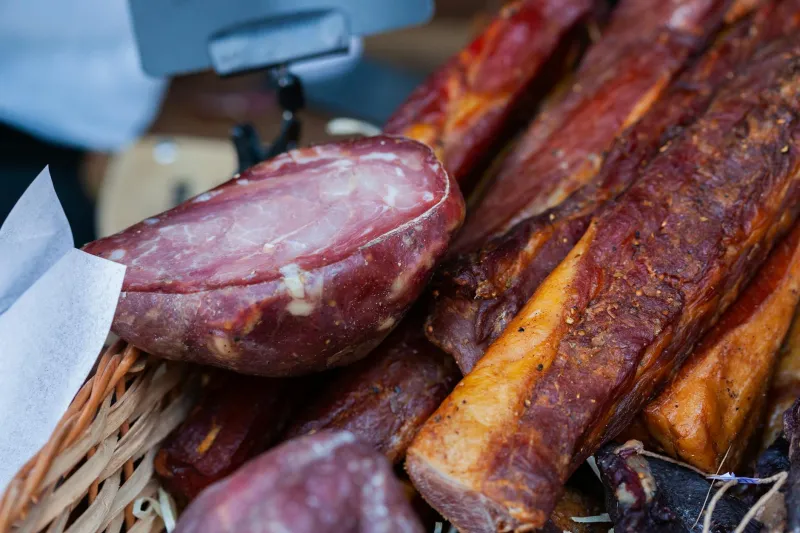
The result hangs from centuries-old oak beams: hams and bacon sides that glow like burnished copper, their surfaces darkened by months of exposure to smoke that carries the essence of the Scottish Highlands in every particle. This is cured meat as it existed before industrialisation, before standardisation, before anyone decided that all bacon should taste the same.
The Fuel Makes the Flavour
What makes Highland-cured pork so distinctive isn't just the traditional methods—it's the fuel that feeds the fires. Peat, the compressed remains of ancient bog plants, burns differently from wood, producing a cooler, more complex smoke that penetrates meat slowly and completely.
"Peat smoke is patient," explains Dr. Sarah Henderson, a food scientist at Edinburgh University who has spent five years studying traditional Scottish smoking methods. "Oak gives you sharp, quick flavours—vanilla notes, some tannins. Apple wood is sweet and light. But peat... peat is like smoking with the essence of time itself."
 Photo: Edinburgh University, via zomagazine.com
The peat MacLeod burns was cut from bogs that began forming when the Romans occupied Britain. Each shovelful contains compressed heather, bog myrtle, and sedges that grew when his valley looked entirely different. The smoke carries these ancient flavours forward, creating taste profiles that commercial smoking simply cannot replicate.
Northern England's Secret Tradition
Two hundred miles south, in a stone barn tucked into the Yorkshire Dales, Tom Hargreaves continues a tradition that predates the industrial revolution by centuries. His family has been curing pork with peat and juniper since before records were kept, developing techniques that remained unchanged until his grandfather's generation.
 Photo: Yorkshire Dales, via images.immediate.co.uk
"The old-timers never wrote anything down," Hargreaves explains, splitting juniper branches with a hand axe his great-grandfather forged. "Everything was passed down through watching, through doing, through tasting. You learned by making mistakes and remembering what worked."
Hargreaves' bacon carries the mineral tang of Yorkshire peat, subtly different from MacLeod's Highland product but equally distinctive. The juniper adds gin-like botanical notes, while wild herbs gathered from the surrounding fells contribute layers of flavour that change with the seasons.
"Spring bacon tastes different from autumn bacon," he notes, slicing paper-thin samples from hams cured months apart. "The herbs are different, the peat burns differently in different weather, even the pigs taste different depending on what they've been eating. You can't get that consistency with industrial methods—but you get something better."
The Lost Art of Fire Management
What strikes visitors to these operations is the complexity of knowledge required to maintain traditional peat fires. Unlike wood-fired smokehouses, where temperature control is relatively straightforward, peat burning requires understanding of moisture content, air flow, and the subtle chemistry of combustion that produces the desired smoke characteristics.
"Peat isn't just peat," MacLeod explains, examining a brick of fuel cut from different depths in the same bog. "Surface peat burns hot and quick—good for starting fires but wrong for smoking. Deep peat, the black stuff that's been compressed for centuries, that burns slow and cool. And bog peat smokes different from hill peat, which smokes different from fen peat."
The knowledge required to read these differences, to adjust air flow and fuel composition for changing weather conditions, represents generations of accumulated expertise that was never formally documented. When traditional smokehouses closed across Britain in the post-war decades, this knowledge disappeared with them.
Why Britain Forgot Its Smoke
The decline of peat smoking in Britain parallels broader changes in food production and rural life. Unlike Germany's Black Forest or Spain's Jamón regions, where traditional curing methods became protected designations and tourist attractions, Britain's smoking traditions remained scattered across individual farms and small producers.
"We never celebrated our own charcuterie tradition," argues food historian Dr. James Morton, author of 'Smoke and Salt: Britain's Lost Preserved Meats.' "We imported ideas about what good cured meat should taste like instead of developing what we already had."
The result was a curious cultural amnesia. While British consumers developed sophisticated palates for Italian prosciutto and German speck, products that might have been superior versions of traditional British cured meats virtually disappeared from the national diet.
Climate and regulation also played roles. Scotland's damp climate, challenging for many preservation methods, proved ideal for slow peat smoking. But modern food safety regulations, designed for industrial production, made small-scale traditional operations increasingly difficult to maintain.
The Renaissance Generation
Today, a new generation of producer-artisans is rediscovering these techniques, driven by consumers seeking authentic flavours and sustainable production methods. MacLeod's waiting list for Highland peat-smoked bacon extends six months, while Hargreaves supplies restaurants across northern England with products that chefs describe as "unlike anything else available."
"The flavour is just the beginning," explains chef Sarah Wilson of Manchester's acclaimed Mana restaurant, preparing a dish featuring Hargreaves' juniper-smoked shoulder. "This meat tells a story—about place, about tradition, about a way of life that almost disappeared. You can taste the landscape in every bite."
The revival extends beyond individual producers. The Scottish Traditional Skills Centre now offers courses in peat smoking, while the Yorkshire Dales National Park Authority has funded documentation of traditional Dales curing methods before the knowledge disappears entirely.
Challenges and Opportunities
Yet significant challenges remain. Environmental concerns about peat extraction conflict with traditional use, forcing producers to source fuel from sustainable cutting operations that may not produce optimal smoking characteristics. Climate change is altering peat bog ecosystems, potentially affecting the fuel supply that makes these products possible.
Regulatory frameworks designed for industrial food production often struggle to accommodate traditional methods that don't fit standard categories. MacLeod spent two years working with food safety authorities to certify his operation, a process that nearly bankrupted his small business.
"The regulations assume you're trying to make the same product every time," he explains. "But traditional smoking is about working with natural variation, not against it. Some batches will be different—that's not a flaw, it's the point."
The Future of Fire
Despite these challenges, the revival of traditional British smoking methods represents more than culinary nostalgia. In an era of increasing concern about industrial food production and environmental sustainability, these small-scale operations offer models for food systems that work with natural processes rather than against them.
The peat-smoked hams hanging in MacLeod's smokehouse carry more than flavour—they carry the possibility of a different relationship with food, one rooted in place and season, in traditional knowledge and sustainable practice. Whether Britain's forgotten smoke will find its place in the nation's culinary future remains to be seen, but for those willing to seek it out, the taste of what we almost lost lingers in the Highland air, waiting to be rediscovered.