The Vanishing Crystals
Stand on the Norfolk coast near Brancaster and squint through the morning mist, and you might just glimpse the ghost of Britain's lost salt empire. Where once hundreds of shallow pans caught and concentrated seawater into precious white crystals, now only reed beds and reclaimed farmland remain. The transformation represents one of the most complete industrial extinctions in British history — and one of our most overlooked culinary losses.
"We've forgotten that salt has a place," declares Peter Keenan, one of the handful of artisans working to resurrect British sea salt production. From his base on the Essex coast, Keenan tends a modest collection of evaporation pans that would have been familiar to medieval saltworkers. "French fleur de sel, Himalayan pink salt, Hawaiian black salt — people understand these have character. But mention British sea salt and they look at you blankly."
The irony is profound. Britain, surrounded by some of the world's most mineral-rich waters, imports virtually all its salt from industrial mines and foreign evaporation facilities. We've surrendered one of our most fundamental food processing capabilities to global commodity markets, losing not just economic value but culinary heritage in the process.
Ancient Techniques, Modern Revival
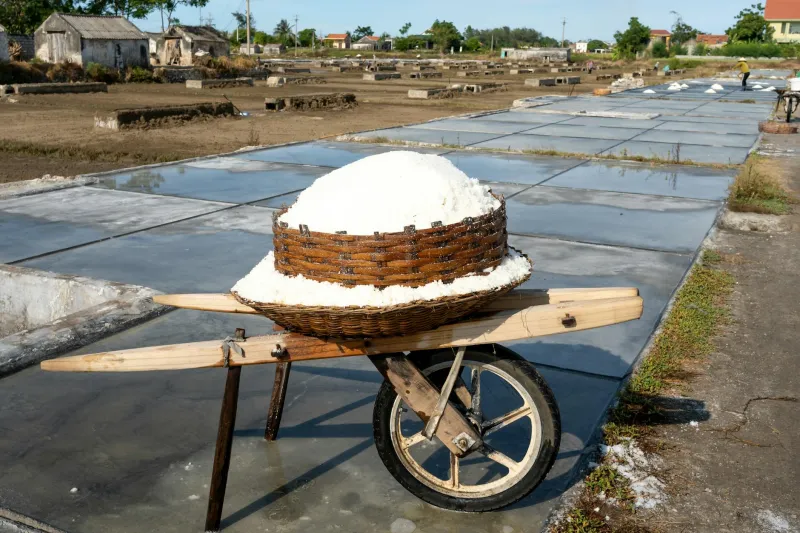
The traditional saltern operated on principles unchanged since Roman times. Seawater, channelled into shallow clay or wooden pans during high tide, would slowly concentrate through wind and solar evaporation. The process required extraordinary skill — too much heat and the salt would be bitter, too little and algae would contaminate the harvest. Master saltworkers developed an almost mystical understanding of weather patterns, tidal variations, and the subtle indicators that marked perfect crystallisation.
"Every coast produces different salt," explains Emma Peacock, whose family has revived saltern operations on Lindisfarne. "The Northumberland waters give us these beautiful pyramid-shaped crystals with a clean, almost metallic finish. It's completely different from what Peter produces in Essex, or what we're seeing from the new operations in Scotland."
Peacock's salt pans occupy land that her ancestors worked three centuries ago, before cheap imports and industrial processing made artisan production economically unviable. Her revival represents more than nostalgic craft-making — it's a deliberate challenge to the homogenisation of British food culture.
The Terroir of the Tide
The concept of terroir — the idea that place fundamentally shapes flavour — is well established in wine and cheese production, but salt producers argue their product expresses locality just as distinctly. British coastal waters, influenced by everything from limestone cliffs to peat runoff, create salts with genuinely unique mineral profiles.
"Taste salt from the Solway Firth against salt from the Cornish coast," challenges Keenan. "They're completely different products. The Solway salt has this incredible depth from the granite watershed, whilst Cornwall gives you these bright, almost citrusy notes from the tin-rich geology."
This isn't marketing hyperbole. Laboratory analysis confirms that British sea salts contain trace minerals — magnesium, potassium, calcium — in proportions that reflect their immediate coastal environment. These variations affect not just flavour but functionality in food preparation, influencing everything from bread fermentation to cheese aging.
Chefs Take Notice
The revival of British salt production has caught the attention of a new generation of chefs committed to hyper-local sourcing. At restaurants across the country, kitchen brigades are discovering how regional salts can enhance and complement local ingredients in ways that generic table salt simply cannot achieve.
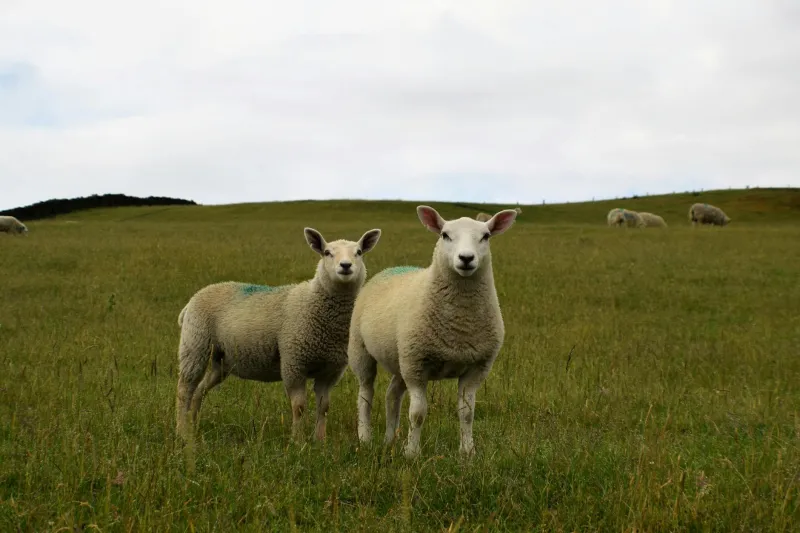
"We use Lindisfarne salt for our Northumberland lamb because they share the same landscape," explains Tom Chadwick, head chef at a acclaimed restaurant in Newcastle. "The salt carries mineral notes that echo the herbs and grasses the sheep graze on. It's not just seasoning — it's completing a flavour story that begins with the soil."
Similarly, artisan food producers are rediscovering the crucial role that local salt once played in traditional preservation techniques. The revival of British charcuterie, farmhouse cheese production, and traditional fish curing all depend on understanding how different salts interact with proteins and moisture.
Economic and Environmental Costs
Britain's dependence on imported salt carries hidden costs that extend far beyond the immediate economic impact. Industrial salt production, whether from underground mines or massive evaporation facilities in developing countries, often involves significant environmental degradation and carbon-intensive transport networks.
"We're shipping salt thousands of miles when we're surrounded by the raw material," argues Dr Michael Henderson, an agricultural economist at Edinburgh University. "From a sustainability perspective, it's completely mad. Local salt production could reduce food miles whilst supporting coastal communities that desperately need economic diversification."
The environmental argument becomes particularly compelling when considering the energy requirements of industrial salt processing. Modern facilities use vast amounts of electricity and fossil fuels to achieve what British saltworkers once accomplished using only wind, sun, and tidal energy.
Regulatory Barriers
Despite growing interest from producers and consumers, the revival of British salt production faces significant regulatory challenges. Modern food safety requirements, designed for industrial-scale operations, often prove prohibitively expensive for small-scale artisan producers.
"The bureaucracy assumes you're running a chemical plant," complains Peacock. "Getting approval for a traditional saltern involves the same paperwork as a major food processing facility. It's completely disproportionate to what we're actually doing."
Some producers argue for regulatory reform that acknowledges the fundamental differences between artisan and industrial salt production, potentially creating streamlined approval processes for traditional methods that have been safely used for centuries.
The Future of British Salt
The handful of producers currently working to revive British salt production remain optimistic about long-term prospects. Growing consumer interest in provenance, sustainability, and authentic flavours creates market conditions that could support expanded domestic production.
"We're not trying to compete with industrial salt on price," clarifies Keenan. "We're offering something completely different — a product with genuine character, environmental credentials, and cultural significance. That's worth paying for."
The challenge lies in scaling up production whilst maintaining the artisanal qualities that make British sea salt distinctive. Some producers are experimenting with modern technology — solar panels to supplement natural evaporation, precision monitoring systems to optimise crystallisation — whilst preserving the essential character of traditional methods.
As climate change threatens coastal communities across Britain, the revival of salt production offers one model for economic adaptation that celebrates rather than abandons traditional relationships with the sea. The white gold that once sustained our ancestors might yet help secure our culinary future.