Purple and Patient: The Moorland Beekeepers Bringing Scotland's Heather Honey Back
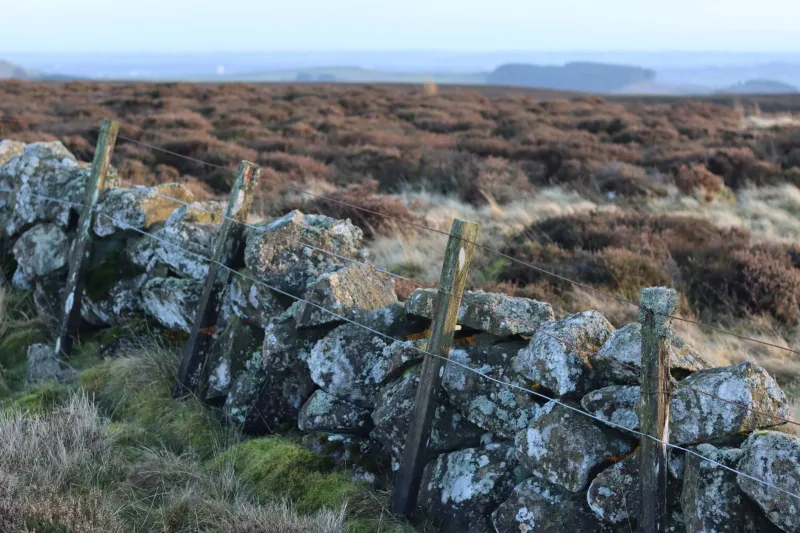
There is a window, narrow as a gate in a drystone wall, when everything has to go right. The ling heather needs to be in full bloom. The weather needs to hold — not too wet, not too cool, not too windy. The bees need to be strong, healthy, and in the right place at precisely the right moment. Miss it, and you wait another year. Get it right, and you come away with something so distinctive, so rooted in a specific landscape, that no label in the world could fake it.
Heather honey is not like other honeys. It thickens to a gel rather than crystallising in the usual way, and when you work it with a spoon it becomes briefly liquid before firming up again — a property called thixotropy that bakers and chefs find endlessly useful and that the rest of us simply find remarkable. The flavour is assertive: faintly bitter, deeply floral, with a tannin note that echoes the moorland itself. It is, in short, a honey that tastes of somewhere. And that somewhere is increasingly worth fighting for.
A Tradition That Nearly Slipped Away
For much of the nineteenth and early twentieth centuries, heather honey was a staple of Scottish rural life. Beekeepers would load their hives onto carts — and later lorries — and drive them up to the moorland in late July, timing the migration to catch the first flush of ling. The practice was called 'taking bees to the heather', and it was as much a seasonal ritual as lambing or harvest.
But the postwar decades were not kind to either the heather or the bees. Grouse moor management became more intensive in some areas, while in others the moorland simply began to scrub over as grazing pressure fell away. Hen harrier and curlew numbers collapsed alongside invertebrate populations. And the beekeepers who had once made the annual migration found the journey less and less worth making: the heather was patchier, the yields were down, and the market for premium Scottish honey had largely been swallowed by imported product sold under vague British branding.
What survived did so through stubbornness, mostly. A handful of beekeepers in Perthshire, Angus, and the Cairngorms kept the tradition alive not because it was profitable but because they couldn't quite bring themselves to stop.
New Hands on Old Hives
In the last decade, something has shifted. A new generation of beekeepers — some from farming families, others arriving from entirely different careers — has started to look at heather honey not as a sentimental relic but as a genuine commercial opportunity. And they are approaching it with a seriousness that the tradition perhaps never quite had before.
Elspeth Cairns, who manages around 80 hives across a stretch of Angus moorland, came to beekeeping after years working in food retail. She spotted the gap plainly. 'There was this enormous appetite for provenance,' she says. 'Chefs and delis wanted to know exactly where their honey came from, which moor, which beekeeper. And nobody was really offering that in a systematic way for heather honey.'
She spent three seasons learning the flowering patterns of her particular ground before she felt confident enough to market it properly. The heather on her moor peaks roughly a fortnight later than lower ground to the east, which means she can sometimes extend her harvest window by moving hives between sites. 'You learn to read the landscape,' she says. 'Which slopes catch the morning sun, where the drainage is good enough to produce strong flowering. It takes years to understand.'
That patience is a recurring theme. Heather honey cannot be rushed. The nectar has a high water content when freshly collected, which means the bees need longer to process it, and extraction requires a press rather than the centrifuge used for most honeys. The equipment investment is not trivial, and the learning curve is steep.
Working with the Moor
What makes the current revival particularly interesting is the degree to which beekeepers are working alongside land managers rather than simply turning up with hives. Across Perthshire and into the Cairngorms National Park, conversations are happening between beekeepers, estate factors, and conservation bodies about how heather management can serve multiple purposes simultaneously.
Controlled burning — the traditional method of maintaining heather at the right age for grouse — creates a mosaic of growth stages that also happens to suit bees well. Young heather produces abundant nectar; older, woodier plants provide structure and shelter. A well-managed moor, from a beekeeper's perspective, is not unlike a well-managed orchard: diversity of age and condition is everything.
Some estates have begun actively welcoming beekeepers as part of a broader ecological argument. Having pollinators on the moor supports wildflower diversity, which in turn supports insects, which supports ground-nesting birds. It is not a simple equation, but the direction of travel is encouraging.
Climate, however, remains the variable nobody can control. Warmer springs are advancing the flowering of some heather species, which can disrupt the timing of hive migrations. Wetter Augusts — an increasingly familiar feature of Scottish summers — reduce foraging time and can cause honey to ferment in the comb if not extracted promptly. Beekeepers are adapting, moving hives earlier, monitoring moisture levels more carefully, and in some cases selecting for bee strains better suited to the conditions.
Finding the Market
The commercial picture is improving. Specialist food shops, particularly in Edinburgh and Glasgow, have developed a reliable appetite for properly labelled, single-origin heather honey. A small number of distilleries have begun using it in liqueurs and limited-edition expressions. And the restaurant trade — always a useful bellwether for ingredient trends — has started paying attention.
The price point is necessarily high. A jar of genuine Scottish heather honey, properly produced and honestly labelled, will cost considerably more than the blended product that fills supermarket shelves. But the people buying it are not shopping on price. They want the story, the place, the season — the whole geography of the thing compressed into a 340-gram jar.
For the beekeepers making that case, the work is slow and the margins are modest. But there is something quietly satisfying about a product so completely tied to its landscape that it cannot be manufactured elsewhere or faked convincingly. The moor makes the honey. The honey tells you about the moor. It is, in its own unhurried way, exactly the kind of food that deserves a place on the British table.