Of Thorn and Table: Why Britain's Old Boundaries Are Back on the Menu
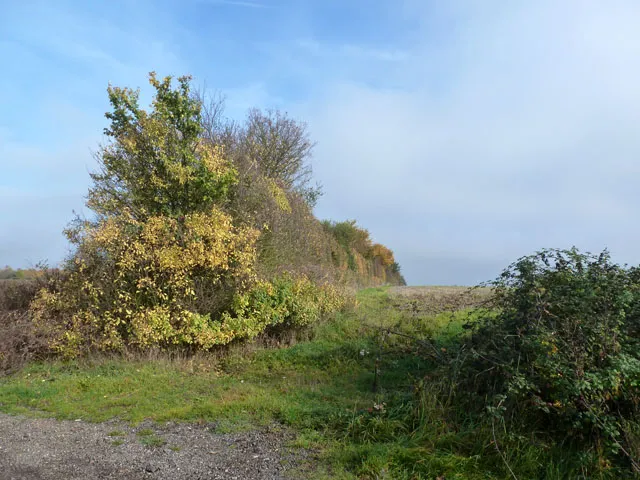
Photo: Robin Webster , CC BY-SA 2.0, via Wikimedia Commons
A Fence That Fruits
Stand on any lane in Devon in late September and the hedge is doing several jobs at once. It is a boundary, a windbreak and a nursery for birds. It is also, if you know what you are looking at, a pantry. Blackthorn is heavy with sloes. Dog rose hips are turning scarlet. Hazel nuts are ripening in their green collars, crab apples are dropping into the verge, and elderberries are dark enough to stain a thumb.
For generations, these were not novelty ingredients. They were store-cupboard food: sloe gin, rosehip syrup, crab apple jelly, elderberry rob. The past few years have brought a new appetite for that old knowledge, but this is not a gold rush. It is a quiet reassessment of what a field boundary is for. A hedge is not a strip of wilderness left over from farming. It is a piece of farm infrastructure that happens to be alive.
The Craft Beneath the Fruit
A hedge that fruits well is usually a hedge that has been managed. Left alone, a hawthorn boundary turns into a line of leggy trees with gaps at the bottom. Laid properly, it becomes a dense, thorny barrier that will turn stock and shelter nesting birds.
Hedge-laying is the old craft of cutting a stem part-way through, bending it almost horizontal and weaving it into a living fence. The stems are held in place with stakes and hazel binders. Done well, the hedge is rejuvenated rather than destroyed. Done badly, it is a mess. The National Hedgelaying Society still runs championships and training days, and the best layers make the work look easy. It is not. A good hedge-layer reads the growth, chooses the right stems, and works with the weather and the season.
The fruit is a by-product of good structure. A thick, thorny base gives cover to mice, voles and insects. Higher up, berries feed thrushes and fieldfares. The hedge is a corridor for dormice and bats, and a hunting line for barn owls. It also gives cattle shade in summer and a windbreak in winter. The larder and the livestock are part of the same system.
Picking With Permission
Foraging has a habit of sounding romantic until you meet a farmer who has found a gate left open and a hedge stripped bare. The rules are simple and worth repeating. Ask permission. Know what you are picking. Leave plenty for birds and for next year's growth. Avoid busy roads and sprayed verges. Wash what you take.
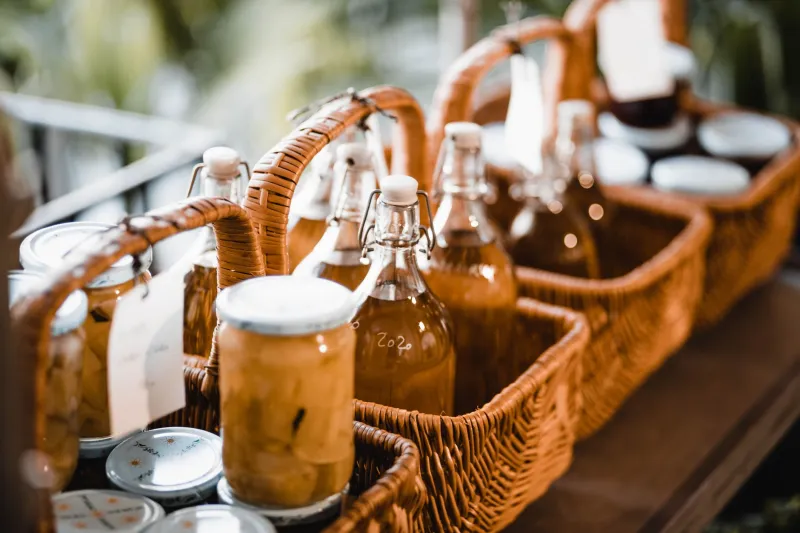
The commercial side is small, and that is probably healthy. A few rural businesses make cordials, jellies, syrups and dried rosehip tea from hedgerow fruit. Farm shops sell crab apple jelly. Pubs put sloe gin on the shelf. The harvest is staggered across weeks and months, and it depends on the weather. A good hedge year is not a jackpot. It is a handful of days when the fruit is right and the weather holds.
The Economics of a Good Hedge
Hedge-laying is not cheap. It takes time, skill and the right kind of timber. Agri-environment schemes have helped, but no one lays a hedge for the grant alone. The food income is modest too. You cannot run a farm on sloe gin.
But modest is not meaningless. A hedge that produces fruit for a village market, a farm shop or a pub kitchen is a hedge that people value for more than its subsidy. It also encourages better management. A neglected hedge produces little fruit and less wildlife. A laid hedge produces both, and it looks like a working boundary rather than an abandoned one.
The wider point is that hedgerows are one of the shortest supply chains in Britain. There is no warehouse, no cold store and no long haul. The fruit is picked within walking distance of the kitchen that uses it. That is not a solution to the national diet. It is a sensible use of what is already there.
A Larder Without a Warehouse
As of 2026, the hedgerow larder will never fill a supermarket aisle. That is the point. It is seasonal, local and low-input. It depends on craft, patience and a bit of restraint. The old boundary is not a museum piece. It is a working edge between field and lane, pasture and river, and it is back on the menu in the quietest possible way. From pasture and river to the British table, the hedge is one of the shortest journeys we have.