The Apple Detectives: Saving Britain's Lost Orchard Varieties Before Time Runs Out
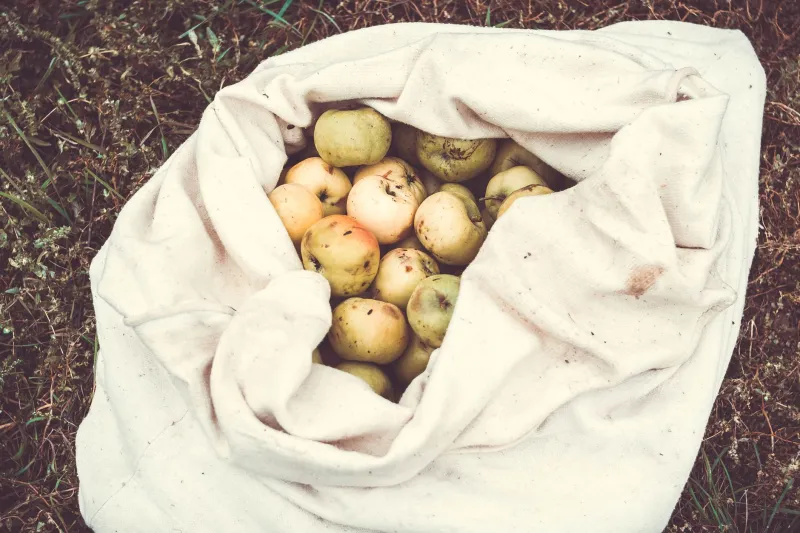
On a drizzly October morning in a Gloucestershire orchard that hasn't been commercially managed in forty years, Joan Whitmore is doing something that looks, from a distance, like a very slow kind of treasure hunt. She moves methodically between gnarled, lichen-covered trees, picking a single apple from each, wrapping it carefully in tissue paper, and noting its position on a hand-drawn map. Some of the trees are so old they've begun to lean dramatically, propped by their own lower branches. One has grown almost entirely horizontal, its trunk silvered and cracked, still fruiting despite everything.
"This one I don't know yet," Joan says, holding up a small, russeted apple with a lopsided shape and a faint flush of orange on one cheek. She cuts it open. The flesh is cream-coloured, fine-grained, and smells of something between pear drops and warm hay. "But it's not nothing. It's definitely not nothing."
Joan is a pomologist — a specialist in the study and classification of fruit — and she's been doing this kind of detective work for the best part of two decades. She's one of a small but quietly passionate community of people dedicated to finding, identifying, and propagating Britain's lost and forgotten apple varieties before the trees that carry them die.
A Vanishing Orchard Nation
The scale of what's been lost is difficult to fully absorb. Britain once cultivated somewhere in the region of six thousand distinct apple varieties, many of them intensely local — known only in a single county, sometimes only in a single village, named for the family that grew them or the place where they were first found. By the late twentieth century, the commercial apple trade had narrowed that diversity to a handful of varieties suited to supermarket requirements: uniform size, long shelf life, reliable colour, tolerance of cold storage.
The old orchards — the dense, unruly, species-rich spaces that once occupied corners of farms and manor house grounds across the country — were grubbed up in their thousands during the postwar decades, encouraged by agricultural subsidies that favoured arable land. What survived did so largely by accident: in the gardens of old houses, along parish boundaries, in the corners of fields that were too awkward to plough.
Those survivors are what people like Joan are looking for.
The Work of Identification
Identifying an unknown apple variety is painstaking, methodical work. There are reference collections — most notably at Brogdale Farm in Kent, which holds the National Fruit Collection and represents the largest gathering of apple varieties in the world — but matching a found specimen to a known variety requires careful observation across an entire season. Colour, russeting, the shape of the eye and the depth of the cavity, the texture and flavour of the flesh, the timing of flowering and fruiting: all of these have to be recorded and compared.
Modern DNA analysis has made the process faster and more reliable, and it has also produced some extraordinary surprises. Varieties long thought extinct have turned up in unexpected places — a Cornish farmhouse garden, a Northumberland churchyard, the grounds of a demolished Victorian villa. In 2016, a variety called the Herefordshire Beefing, which had been considered lost for over a century, was rediscovered in a hedgerow near Bromyard. Its rediscovery caused genuine excitement in pomological circles.
"Every year, we find things we didn't expect to find," says Dr. Andrew Ferris, who leads an apple identification project in partnership with several county wildlife trusts. "And every year, we also find trees that are in their last season — too old, too damaged to save by grafting in time. That's the race we're running."
Grafting the Future
The mechanism of preservation is grafting: taking a small cutting, or scion, from a living tree and uniting it with rootstock to create a new tree genetically identical to the original. A skilled grafter can take a variety back from the brink of extinction with a single successful cutting. Several can establish a collection that will outlast the original tree by centuries.
Orchards established from rediscovered varieties are now growing at heritage sites, community orchards, and farm diversification projects across the country. In Devon, a group of farmers has planted what they call a "county orchard" — a living archive of Devon-specific varieties, open to the public each autumn for tasting days and pressing events. In Worcestershire, the county's apple heritage is being documented and planted in village orchards as part of a landscape recovery programme.
The flavours on offer in these collections are a revelation to anyone who has grown up eating only commercial varieties. A Bloody Ploughman, a Scottish variety with deep red flesh, tastes of something between raspberry and sharp cherry. The Pitmaston Pineapple, a Victorian dessert apple from Worcestershire, has a honeyed sweetness with a faint tropical note that is exactly as its name suggests. The Norfolk Beefing, a large cooking apple with a complex, wine-like flavour, was once the standard for baked apples across the county and remains, in the opinion of many who've tried it, unsurpassed.
From Archive to Table
The conservation effort isn't purely academic. Many of the rediscovered varieties have qualities that make them genuinely exciting in the kitchen — qualities that commercial breeding programmes never prioritised because they didn't suit the logistics of supermarket supply chains.
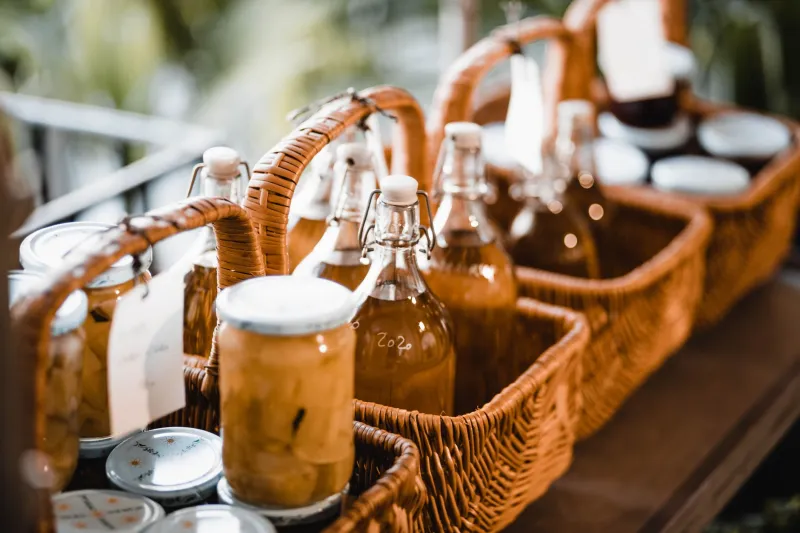
Some have extraordinary keeping qualities, remaining firm and flavoursome in a cool store for months without refrigeration. Others are exceptional for cider-making, with tannin and acid levels that produce complex, long-lived drinks. Several are being adopted by artisan producers who see their rarity and regional identity as a selling point rather than a limitation.
Sue Prentice, who makes cider on a small scale in Somerset, has recently begun using two rediscovered local varieties alongside her standard bittersweet and bittersharp apples. "The flavour they add is completely different to anything I was getting before," she says. "One of them has this extraordinary floral quality — almost like elderflower — that you'd never get from a Kingston Black or a Dabinett. It changes the whole character of the blend."
Why It Matters
At its heart, the apple conservation movement is about more than fruit. It's about the relationship between landscape, culture, and food — the idea that a variety of apple that evolved in a particular valley, fed by particular soils, shaped by particular hands over generations, is a form of living heritage as significant as a vernacular building or a dialect word.
Joan Whitmore, back in her Gloucestershire orchard, wraps the last of her samples carefully and closes her notebook. The unidentified russeted apple is still in her hand. She takes a bite. Her expression shifts — not quite a smile, but something close to satisfaction.
"It's good," she says simply. "Somebody planted this tree because it was good. They had a reason. We just need to find out what it was called so we can make sure it doesn't disappear again."