New Boots on Old Ground: The Young Gamekeepers Changing What Ends Up on the Plate
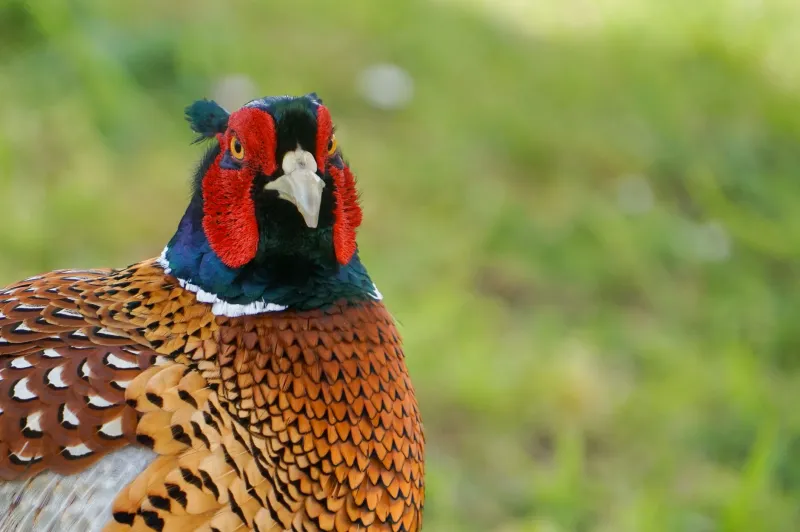
Jamie Holroyd is twenty-six years old and has been keepering since he was nineteen. He manages a stretch of mixed moorland and farmland in the North Yorkshire Dales, works with three part-time beaters, and has a WhatsApp group with seven chefs. He is not what most people picture when they think of a gamekeeper. He is, he says cheerfully, exactly what gamekeeping needs to become.
'The old model was very focused on numbers,' he explains, leaning on a gate above a valley that runs down to a becks lined with alder. 'How many birds over the guns, how many days sold, how many tips at the end of a drive. That's not wrong — an estate has to pay its way. But it's not the whole picture. The whole picture includes what the landscape looks like, what's nesting in it, what the chefs want, and whether any of this is going to make sense in twenty years' time.'
That kind of talk would have raised eyebrows in some keepering circles a decade ago. Today, it is becoming something closer to mainstream — at least among the younger cohort entering the profession through colleges, apprenticeships, and an increasingly active online community that shares ideas across estate boundaries.
Beyond the Driven Day
The driven grouse shoot and the formal pheasant day remain the commercial backbone of many estates. Nobody serious about rural economics is pretending otherwise. But the driven model has faced sustained scrutiny — over predator control practices, over the ecological footprint of releasing millions of non-native pheasants annually, over the concentration of wealth it represents. Young keepers tend to be more comfortable acknowledging these tensions than their predecessors, partly because they grew up with social media and partly because they can see the direction of public opinion.
The response, among the more thoughtful practitioners, is not defensiveness but diversification. Walked-up shooting over pointing dogs. Rough shooting on mixed ground. A greater emphasis on woodcock, snipe, and other wild quarry that require habitat management rather than rearing and release. And, increasingly, a direct relationship with the food market that bypasses the traditional game dealer entirely.
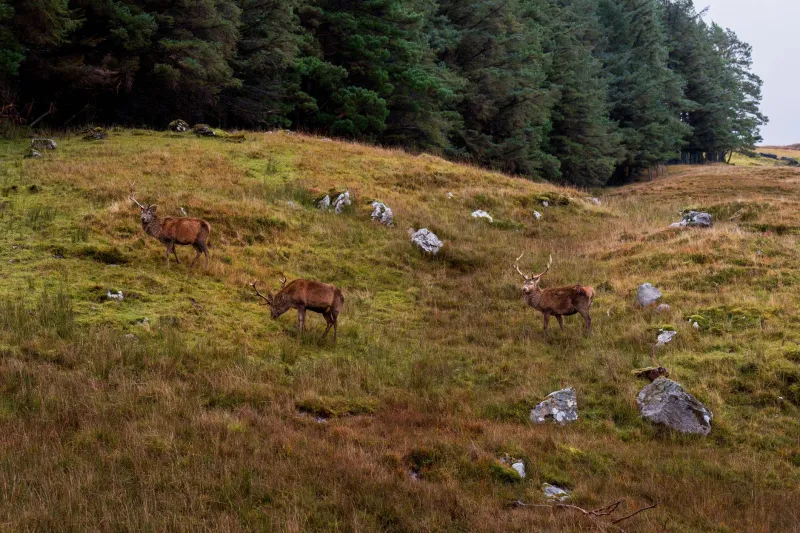
Ross Mackintosh, who keeps on a Highland estate in Sutherland, has spent the last three seasons building what he calls a 'larder-to-kitchen' model. Every deer, grouse, and woodcock shot on his ground is processed in the estate larder — which he has upgraded significantly — and sold either directly to restaurants in Inverness and Edinburgh or through a small online retail operation. The margins are considerably better than the dealer route, and the feedback from chefs gives him information he would not otherwise have.
'A chef told me last autumn that the woodcock we sent were the best he'd had in ten years but the legs were bruised on three birds out of eight,' Ross recalls. 'That's information I can use. It changed how we handle the birds after the shot. You don't get that from a dealer — they just take the lot and you never hear anything.'
Habitat as the Product
Perhaps the most significant shift in younger keepering thinking is the move toward habitat as the primary output, with game as a consequence rather than the goal. This sounds like a philosophical distinction, but it has practical implications for almost every management decision.
If your primary objective is producing habitat that supports wild game populations, you make different choices about predator control — more targeted, more selective, with a greater emphasis on habitat improvement as a long-term predator management tool. You think differently about headlands and hedgerows, about the timing of cutting, about which areas to leave rough. You become, in effect, a land manager who shoots, rather than a shoot manager who happens to manage land.
Several younger keepers have engaged seriously with conservation bodies — the GWCT, the RSPB in some cases, Natural England — in ways that would have been unthinkable for an earlier generation. The conversations are not always easy, but they are happening, and the outcomes are sometimes surprisingly productive. Joint research on lapwing and curlew recovery on keepered ground has produced data that benefits both the shooting and conservation arguments.
The Chef Connection
The relationship between keeper and chef is perhaps the most commercially exciting development in this space. A growing number of restaurants — not only in London but in regional cities and market towns — want a direct, named, traceable source for their game. They want to know the keeper, the estate, the species, the date of shooting. They want to be able to write 'woodcock from Sutherland, shot by Ross Mackintosh' on a menu and have that mean something to their customers.
This requires keepers to think about their product in ways that go well beyond traditional practice. Ageing matters — how long a bird hangs, in what conditions, affects flavour profoundly. Handling matters. Presentation matters. A roe deer haunch arriving at a restaurant kitchen needs to be as well-prepared as any butcher's cut if it is to command a premium price and a return order.
Some keepers have invested in proper refrigerated larder space and basic butchery training. Others have partnered with local butchers or game dealers who are willing to work to tighter specifications than the wholesale trade normally demands. A few have gone further, hosting chef visits to the estate — days on the moor, walks through the habitat, conversations about what the land can and cannot produce — as a way of building relationships that last beyond a single season.
Succession and Credibility
The keepering profession has an image problem that its younger members are acutely aware of. The illegal killing of raptors, where it occurs, casts a shadow over an entire industry. The association with wealthy landowners and exclusive shooting parties sits awkwardly in a culture increasingly focused on access and fairness. Young keepers navigating this landscape have to be, in a sense, more publicly accountable than their predecessors ever needed to be.
Most of the ones worth listening to accept that accountability as a reasonable price of doing business in the modern world. They are not naive about the politics, but they are confident enough in what they do — in the habitat they manage, the wildlife they support, the food they produce — to make the case openly.
That confidence, earned on the ground rather than inherited, is what makes this generation worth watching. The moors are not going anywhere. The question is what kind of people will be managing them, and what kind of food will come off them. On current evidence, the answer is more interesting than it has been for a very long time.