Jar by Jar: How Lakeland Cooks Are Putting Summer and Autumn Into Winter Bottles
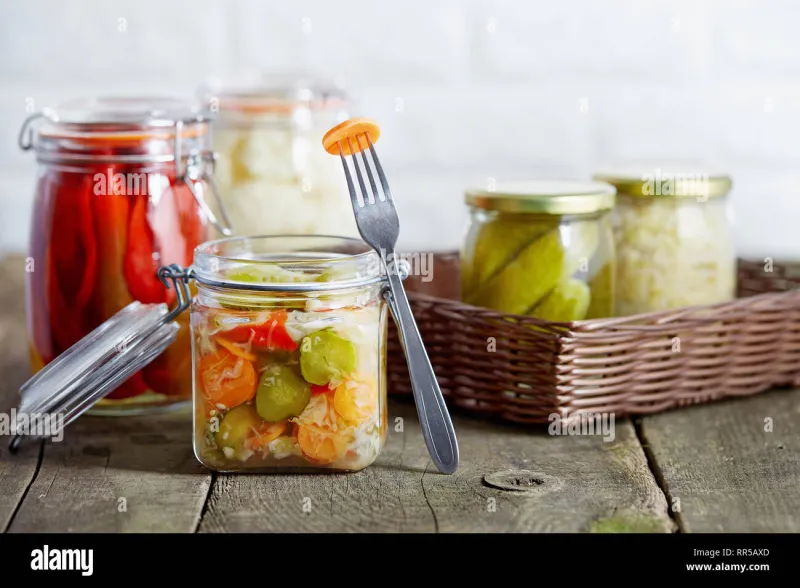
Photo: Lakeland kitchen preserving jars pickling fermenting autumn produce Cumbria, via c8.alamy.com
By the time November arrives in the Lake District, the light is gone by half four and the fells are doing that particular trick they do — disappearing into low cloud so completely that you can stand in a valley and forget there's anything beyond the hedgerow. It's not a landscape that invites wasted effort. You feel, in those weeks, a very old kind of logic: that what you've stored is what you'll eat, and that the work done in September and October was not optional.
This is, of course, not how most people in Britain live any more. The supermarket is open regardless of the season. Strawberries arrive in January. Nothing truly runs out. And yet in the kitchens of Cumbria — in farmhouses and terraced cottages and converted outbuildings across the Lyth Valley, around Ullswater, and up into the Howgills — something is stirring. The shelves are going back up. The preserving pans are coming out. And a generation of cooks who might have let these skills lapse is finding, somewhat to their own surprise, that they don't want to.
What the Pantry Used to Mean
To understand what's happening now, it helps to understand what was there before. Pre-refrigeration food culture in rural Cumbria was, by necessity, a culture of abundance managed carefully. The autumn gluts — damsons from the Lyth Valley, apples from fell-edge orchards, sloes from the hedgerows, mushrooms from the higher ground — had to be dealt with. Not as a hobby or a lifestyle choice, but as a straightforward matter of getting through winter.
Damsons were bottled, made into cheese, turned into gin. Apples were stored in racks, pressed into juice, dried in rings over the range. Cabbages were salted into crocks. Runner beans were layered with salt in earthenware jars. Mushrooms were dried or potted in butter. The pantry was not a place you glanced into occasionally — it was the household's larder, stocked deliberately against the months when nothing grew.
Much of this knowledge survived in fragments: in handwritten recipe books passed between women in the same family, in the institutional memory of WI branches, in the habits of older cooks who'd never entirely given it up. What's happening now is that those fragments are being reassembled, compared, and practised again — not out of necessity but out of something that feels like conviction.
The Fermenters and the Picklers
The current revival has two distinct strands, though they often overlap in the same kitchen. The first is the traditional British preservation repertoire — jams, jellies, chutneys, pickles, and bottled fruit — which never entirely went away but had become marginalised, associated with a certain kind of fête-table domesticity rather than serious food culture. The second is the broader fermentation revival, which has brought kimchi, kefir, kombucha, and wild-fermented vegetables into kitchens that might previously have stuck strictly to Kilner jars and Tiptree.
What's interesting is how naturally these two traditions are coexisting in Lakeland kitchens. A cook in Kendal might make a batch of damson cheese in the classical Cumbrian style and a crock of lacto-fermented green tomatoes in the same week, treating them as complementary rather than competing approaches to the same fundamental problem: too much good food, not enough time to eat it all fresh.
One home cook near Windermere — who began preserving seriously during the first lockdown and hasn't stopped since — describes her approach as "eating the year in the right order." She processes what arrives, stores it methodically, and pulls things out as the next season demands them. Last spring's wild garlic is still in the freezer. The sloe gin from October is settling in the cupboard. A jar of pickled walnuts put up in August is nearly ready. None of it is complicated. All of it requires attention.
The Small Producers Scaling Up
For some, what began as a household practice has grown into something more. The Lake District and its surrounding fringes now support a small but expanding community of artisan producers working with traditional preservation techniques — and the farmers' markets of Ambleside, Penrith, and Ulverston have become their primary outlet.
A producer based in the Lyth Valley, working exclusively with the region's famous damsons, has built a loyal following for her damson gin, damson vinegar, and a damson and sloe jelly that she sells in small batches each autumn. She buys fruit from the same orchards every year, knows the trees by their position on the hillside, and adjusts her recipes depending on how the season has gone. Last year's damsons were smaller and sharper than usual after a dry summer — the jelly needed less added pectin and came out more tannic, which she considered an improvement.
Elsewhere, a husband and wife running a small-holding above Coniston have begun selling their smoked and cured products — streaky bacon from their own pigs, smoked trout from a neighbouring farm, a cold-smoked butter that has attracted attention from restaurants as far away as Manchester — at markets and through a small direct-to-customer list. Their smoking is done in a converted stone outbuilding using oak and applewood. The whole operation is, by industrial standards, tiny. By any other measure, it's producing something extraordinary.
Slowing Down to Keep More
There is a philosophy running through all of this that's worth naming, even if the people involved would be unlikely to call it that. It's about refusing the idea that food should be frictionless — that the gap between harvest and table should be invisible, that seasonality is an inconvenience to be engineered around.
The cook who spends a Saturday afternoon in September working through a basket of windfall apples — coring, slicing, cooking down, potting — is doing something that takes time and produces mess and rewards patience. The jar that comes off the shelf in February, opened alongside a piece of aged cheese or a cold cut from the freezer, is a direct line back to that afternoon. There's a kind of satisfaction in that which no supermarket can manufacture, however good its supply chain.
It is, in the end, a very old way of thinking about food — one that the Lake District's landscape seems to encourage. In a place where the seasons are still visible, where the fells change colour in a way you can watch from your kitchen window, the idea of eating in step with the year doesn't feel like nostalgia. It feels like common sense.