When August Opens the Gates
The calendar may read 2024, but in the village of Laxton, Nottinghamshire, time moves to a different drumbeat. Come 1st August — Lammas Day in the old calendar — something remarkable happens. Private meadowlands that have been jealously guarded through spring and early summer suddenly throw open their gates. What was yours becomes ours, as ancient rights transform individual fields into communal grazing grounds.
This isn't some quaint historical re-enactment. It's working agriculture, and it's producing beef and lamb that carries flavours you simply can't replicate on modern intensive farms.
"People think we're living in the past," chuckles Tom Harrison, whose family has farmed Lammas lands for four generations. "But when you taste the difference in our cattle after they've grazed these mixed commons, you realise we might just be farming for the future."
The Rhythm of the Seasons
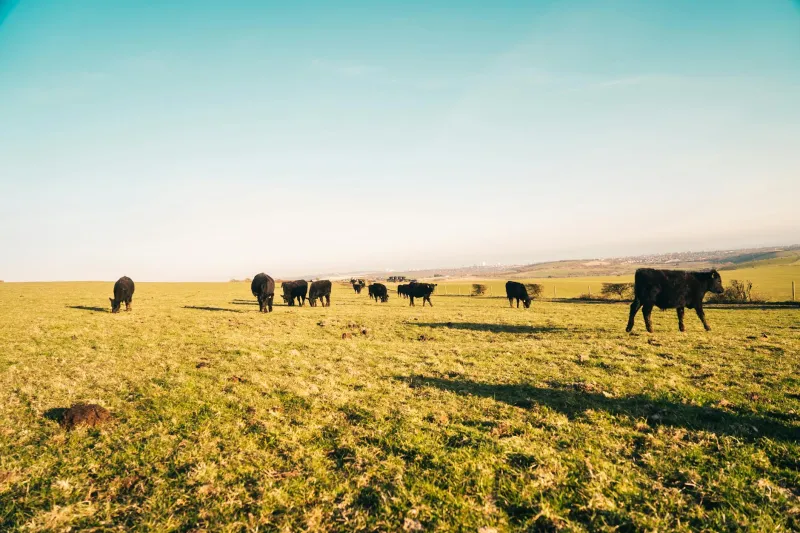
Lammas lands operate on a principle as old as British agriculture itself. From February through to August, landowners have exclusive rights to their meadows — time for hay cutting, early grazing, and careful pasture management. But when Lammas arrives, the ancient commoning rights kick in. Gates swing open, and livestock from across the parish flood in to graze the aftermath.
In Lincolnshire's Gosberton, this system has survived unbroken for over 700 years. The parish still maintains its Court Leet — a medieval institution that governs when animals can enter the commons, how many each farmer may graze, and crucially, what condition the beasts must be in.
"It's not a free-for-all," explains Sarah Mitchell, who serves as the modern equivalent of a medieval reeve. "Every animal is inspected. Sick cattle stay home. Bulls must be ringed. The old rules exist for good reason — they keep both livestock and people safe."
Grass-Fed Gold
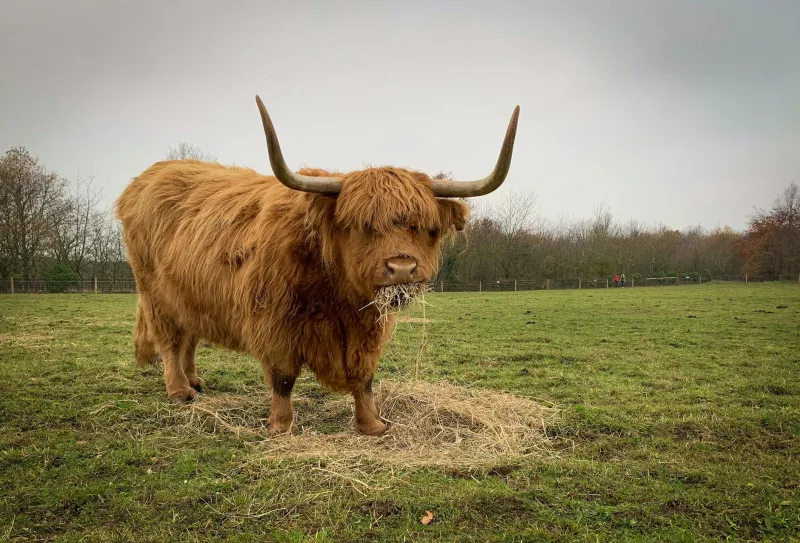
What makes Lammas cattle special isn't just the romance of ancient tradition — it's the extraordinary diversity of their diet. Unlike modern ryegrass leys, these ancient meadows burst with botanical variety. Yorkshire fog mingles with timothy grass, while plantain, dandelion, and clover add their own nutritional complexity.
"Modern grass is like white bread," argues Dr. James Woodward, an agricultural historian who's studied Lammas systems for two decades. "These old pastures are the wholemeal loaf — packed with minerals, herbs, and compounds that simply don't exist in improved grassland."
The proof is in the eating. Cattle and sheep that graze Lammas lands develop meat with deeper, more complex flavours. The beef carries subtle herbal notes, whilst lamb takes on an almost gamey richness that speaks of wildflower meadows and ancient grasses.
Community Bonds, Ancient and Modern
But Lammas lands offer more than just exceptional meat — they're masterclasses in community cooperation. In an age of agricultural isolation, these systems demand collaboration. Neighbours must coordinate hay cuts, agree on stocking rates, and work together to maintain boundaries and water sources.
"You can't be a bloody-minded individualist when you're running Lammas lands," laughs Peter Graves, whose Nottinghamshire farm has been in his family since Tudor times. "You need your neighbours, and they need you. It builds bonds that modern farming has largely lost."
These bonds extend beyond mere practicality. In Gosberton, the annual "drifting" — the traditional roundup of cattle from the commons — remains a community celebration. Families gather, children help sort livestock, and knowledge passes from generation to generation in ways that no agricultural college can replicate.
Lessons for Tomorrow's Table
As Britain grapples with questions about sustainable farming and food security, Lammas lands offer intriguing answers. These systems naturally limit stocking densities, encourage biodiversity, and create resilient agricultural communities. They're carbon-friendly almost by accident, storing vast amounts of carbon in their unimproved soils whilst supporting wildlife that intensive farming has largely banished.
"We're not saying everyone should go back to medieval farming," cautions Dr. Woodward. "But these systems show that extensive, community-based agriculture can be both economically viable and environmentally beneficial. They're producing premium meat whilst supporting ecosystems that modern farming struggles to maintain."
The Future of Ancient Ways
Today, fewer than a dozen English parishes maintain true Lammas systems. Development pressure, agricultural consolidation, and simple unfamiliarity with ancient rights threaten even these survivors. Yet interest is growing among farmers seeking alternatives to industrial agriculture.
"Young farmers are starting to ask questions," notes Sarah Mitchell. "They see our cattle condition, taste our meat, and wonder if we haven't got something right that modern farming has lost."
In Laxton and Gosberton, in the remaining Lammas lands scattered across England, ancient rhythms continue to govern modern lives. Private becomes common, individual becomes communal, and the result is beef and lamb that carries the taste of centuries. It's a reminder that sometimes the oldest ways of doing things might just be the wisest — especially when they end up on Britain's finest tables.