Ghosts in the Mist
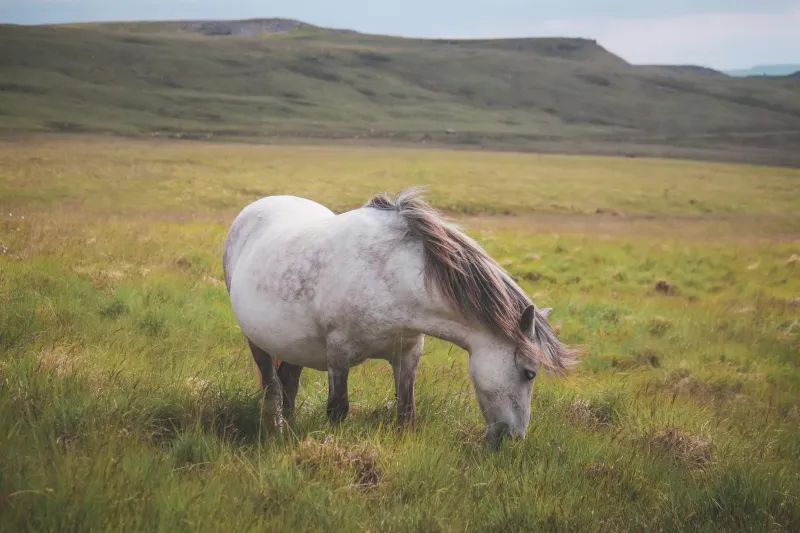
The autumn mist rolls across Exmoor like a grey tide, and through it emerge shapes that might have stepped from a medieval tapestry. Dark bay and dun ponies, their winter coats already thickening, pick their way between the gorse and heather with the sure-footed confidence of creatures born to this unforgiving landscape. These are the Exmoor ponies, Britain's oldest native breed, and they belong to no one and everyone.
Well, almost no one. Because come October, when the leaves turn copper and the bracken dies back to rust, the Commoners of Exmoor will gather for the annual drift – a tradition as old as the Domesday Book, when these hardy little horses first earned their place in our national story.
The Last of the Moorland Families
John Westcott adjusts his flat cap against the morning drizzle and squints across the moor. His family has been gathering ponies here for five generations, and at sixty-three, he's one of the younger faces at the drift meetings. "We're a dying breed ourselves," he says with characteristic West Country understatement. "Thirty years ago, we had twice as many families involved. Now it's maybe a dozen of us keeping the whole tradition alive."
The arithmetic is stark. Where once forty or fifty Commoners – those with ancient rights to graze the moor – would turn out for the autumn gathering, now perhaps fifteen make the effort. The reasons are familiar to anyone who knows rural Britain: children move to the cities, farming margins shrink, and ancient ways of life buckle under modern pressures.
Yet the ponies themselves tell a different story. Hardy, intelligent, and perfectly adapted to their environment, they continue to thrive where other livestock would perish. Their small hooves barely disturb the fragile peat, their browsing creates the mosaic of habitats that ecologists now recognise as crucial to the moor's biodiversity.
More Than Just Pretty Horses
To understand why these ponies matter, you need to think beyond the Christmas card image of wild horses on windswept hills. The Exmoor pony is what conservationists call a 'keystone species' – their grazing patterns create the conditions for everything else to flourish.
Sarah Mitchell, who runs the Exmoor Pony Society, explains it this way: "Without the ponies, the moor would revert to scrubland within a generation. No more purple heather in August, no short grass for ground-nesting birds, no open pools for amphibians. The whole ecosystem depends on their hooves and teeth."
It's a relationship that extends to the human inhabitants too. The short grass created by pony grazing provides the perfect habitat for the grouse that have made Exmoor a destination for discerning shots since Victorian times. The open moorland supports the hill sheep that produce some of the finest lamb in Britain – meat with a flavour shaped by wild thyme, gorse flowers, and the salt spray that drifts inland from the Bristol Channel.
The Autumn Gathering
The drift itself is a masterclass in controlled chaos. Riders spread out across miles of moorland, working with dogs trained to move ponies without panicking them. It's not a roundup in the American sense – there's no lassos or corrals. Instead, it's a gentle pressure, applied with generations of knowledge about how these particular animals think and move.
"You can't force an Exmoor pony," explains Mary Bawden, whose family has been involved in the drift for over a century. "They're too clever and too stubborn. You have to persuade them that going where you want them to go was their idea in the first place."
The gathered ponies are health-checked, wormed if necessary, and then most are released back onto the moor. Some will be kept for breeding, others may find new homes as riding ponies or conservation grazers on nature reserves across Britain. It's a selection process that has kept the breed pure for a thousand years.
A Larder Connection
For those who blanch at the thought, it's worth remembering that until recently, these ponies were as much a part of the local food chain as the sheep and cattle. Pony meat was a staple of the moorland diet well into the twentieth century, prized for its lean, gamey flavour. While that tradition has largely died out, the connection between the ponies and the broader food system remains strong.
The hay meadows that feed them through harsh winters are managed using techniques that haven't changed in centuries. The same families who gather ponies also raise the sheep whose wool once clothed half of Britain, and whose meat still graces the finest tables from Barnstaple to Borough Market.
Looking to the Future
As climate change brings wilder weather and conservation becomes a national priority, the Exmoor ponies and their guardians find themselves unexpectedly relevant. Natural England now pays farmers to graze ponies on nature reserves, recognising what the Commoners have always known – that these animals are the best land managers money can't buy.
Yet the human side of the equation remains fragile. John Westcott's grandson shows promise as a horseman, but he's also got a place at agricultural college and dreams that may take him far from the moor. "We need the young ones to see there's a future in this," John says. "Not just for the ponies, but for the whole way of life they represent."
As the mist lifts and the ponies scatter back across their ancient domain, it's hard not to feel that something precious hangs in the balance. In an age of industrial farming and global food chains, the sight of semi-wild ponies moving across landscape shaped by centuries of careful stewardship feels like a glimpse of what we might lose – and what we might yet choose to save.