The Scent of Forgotten Treasure
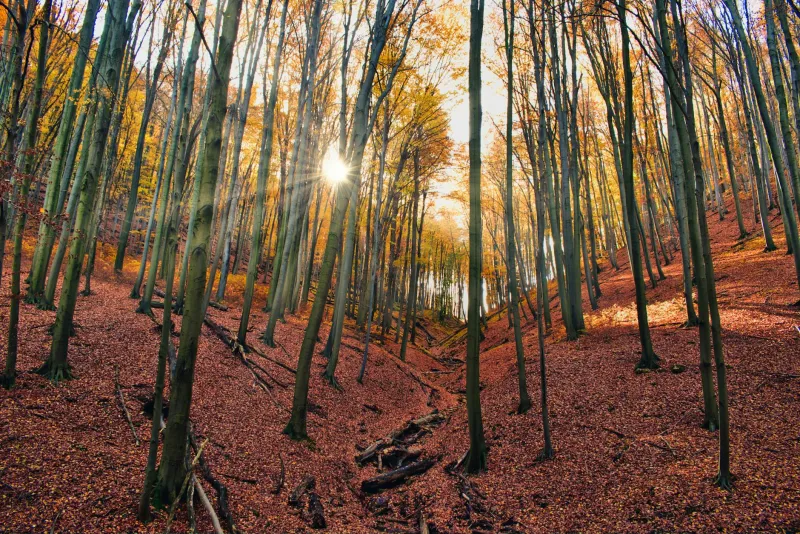
In a Hampshire copse where ancient beeches cast dappled shadows across the woodland floor, Sarah Mitchell crouches beside her springer spaniel, watching as the dog's nose works methodically through the leaf litter. To the untrained eye, this looks like any autumn dog walk. But Pepper's focused intensity tells a different story — she's tracking one of Britain's most elusive culinary treasures.
"People think truffles are purely continental," Sarah explains, her voice barely above a whisper to avoid disturbing the hunt. "But our native summer truffle, Tuber aestivum, has been hiding under our noses for centuries."
The irony isn't lost on her. While British chefs have long looked to Périgord and Alba for their prized fungi, our own woodlands have been quietly producing their own aromatic gold. The summer truffle, with its distinctive warty black exterior and pale marbled interior, may lack the intensity of its more famous cousins, but it carries something uniquely British — a gentle, nutty character that speaks of our chalky soils and temperate climate.
From Pigs to Pooches
The tradition of truffle hunting in Britain stretches back generations, though it nearly vanished in the chaos of two world wars and changing agricultural practices. Victorian records speak of truffle grounds in Wiltshire where trained pigs would root out the prized fungi for London's finest tables. The famous Bath truffles weren't spa treatments but genuine local delicacies, harvested from the downs surrounding the Georgian city.
"My grandfather used to tell stories of the old truffle men," recalls James Hartwell, whose family has farmed in the Chilterns for four generations. "They'd take their pigs out at dawn, following the same routes their fathers had walked. But by the 1950s, it had all but disappeared."
The shift from pigs to dogs wasn't merely practical — though dogs are certainly easier to transport and less likely to eat the merchandise. It reflects a broader change in how we approach our countryside. Where Victorian truffle hunters were often secretive, jealously guarding their productive sites, today's practitioners are more collaborative, sharing knowledge and working to protect truffle habitats for future generations.
The Woodland Partnership
What makes British truffle hunting particularly fascinating is its dependence on our native trees. The summer truffle forms a symbiotic relationship primarily with beech, oak, and hazel — the backbone of our ancient woodlands. This partnership, known as mycorrhiza, sees the fungus providing nutrients to the tree roots in exchange for sugars produced through photosynthesis.
"It's a relationship that's been going on for millennia," explains Dr. Helen Roberts, a mycologist who's spent years studying British truffle ecology. "But it requires stable woodland conditions. The decline in traditional woodland management nearly broke the chain."
The revival isn't happening by accident. A small but passionate community of hunters, chefs, and landowners is working to restore truffle-producing habitats. In Wiltshire, the Truffle Society has mapped historical sites and is working with farmers to plant truffle-inoculated saplings. It's patient work — a newly planted tree might not produce truffles for a decade or more.
From Forest Floor to Fine Dining
The renaissance of British truffle hunting coincides perfectly with the growing movement towards local, seasonal eating. Chefs who once relied solely on imported truffles are discovering that our native varieties offer something different — a more subtle, terroir-driven flavour that pairs beautifully with British ingredients.
"There's something magical about serving a dish where every element comes from within fifty miles," says Tom Bradley, head chef at a Hampshire gastropub that's become known for its truffle dishes. "Our local truffles with chalk stream trout and wild garlic — it tells the story of our landscape."
The season runs from July through November, with peak hunting in September and October when the fungi reach full maturity. Unlike their continental cousins, British truffles are harvested at a more modest scale — a successful day might yield just a handful of specimens, each one precious.
Preserving Ancient Knowledge
Perhaps most importantly, the truffle revival represents something deeper than gastronomy. It's about reconnecting with traditional countryside skills that were nearly lost. Training a truffle dog requires patience, understanding, and a deep knowledge of woodland ecology. It's a craft that links today's hunters with generations of countrymen who knew their landscape intimately.
"Every time we take the dogs out, we're not just hunting for truffles," Sarah reflects, watching Pepper work another promising patch of ground. "We're keeping alive a way of reading the countryside that our ancestors took for granted."
The quiet revolution happening in Britain's truffle woods speaks to something fundamental about our relationship with the land. In an age of industrial agriculture and globalised food systems, these patient hunters and their canine partners remind us that the best treasures often lie hidden in the most familiar places — waiting to be rediscovered by those willing to look carefully and tread lightly.
As autumn deepens and the last leaves fall, the truffle season draws to a close. But beneath the winter soil, the ancient partnerships continue, preparing for next year's harvest. It's a cycle as old as the woodlands themselves, now given new life by a generation determined to keep these traditions alive.