When the Sea Calls
The alarm sounds at 4:30 AM, but Jimmy Henderson has been awake for twenty minutes already. He's been listening to the wind through his cottage windows, feeling the rhythm of the tide in his bones. At sixty-three, he's one of only seventeen licensed haaf-netters left on the entire Solway Firth — keepers of a fishing tradition that stretches back over a thousand years to the Norse settlers who first waded into these treacherous waters.
"My grandfather used to say you don't choose the haaf," Jimmy tells me as we load his Land Rover with the distinctive eighteen-foot wooden nets that define this ancient practice. "The haaf chooses you."
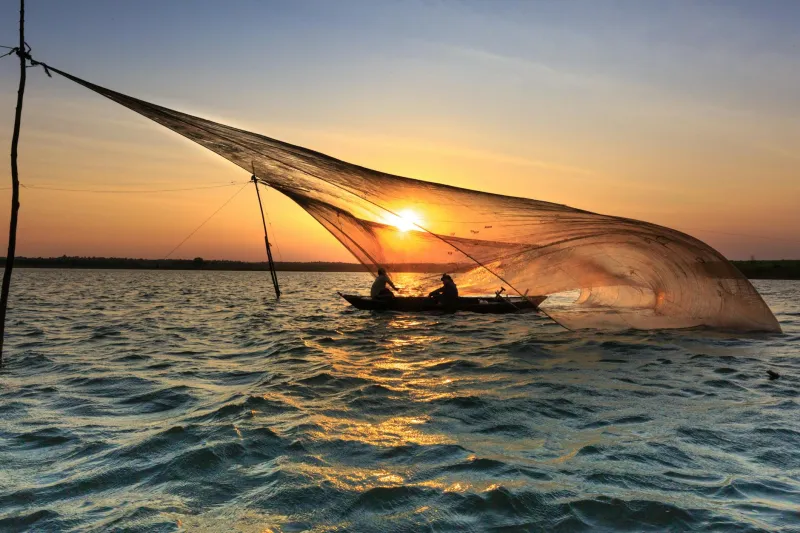
The word itself comes from the Old Norse 'haf', meaning sea or deep water. It's a fitting etymology for a technique that demands its practitioners wade chest-deep into the Firth's notorious currents, holding their nets against the flow and waiting for wild Atlantic salmon to swim straight into their arms.
The Art of Reading Water
By dawn, we're standing on the mudflats of Bowness-on-Solway, watching the tide race across the sands with the speed of a cantering horse. This is no gentle brook fishing — the Solway has the second-highest tidal range in Britain, and its waters can rise six feet in thirty minutes.
"People think we're mad," admits Tommy Storey, adjusting the leather harness that will hold his haaf net steady against the current. "Standing out there in all weathers, waiting for fish that might never come. But there's something about it that gets into your blood."
The nets themselves are works of art — eighteen feet of ash wood formed into a 'Y' shape, strung with traditional hemp mesh that's been soaked in bark tannins to resist the salt water. Each net is handmade and costs upwards of £800, passed down through families or crafted by one of the three remaining net-makers in the region.
Watching these men work is like witnessing a living piece of medieval Britain. They read the water with an intimacy born of lifetimes on the Firth, knowing exactly where the salmon will run based on wind direction, tide height, and the subtle shifts in current that speak to no one but them.
Against the Current
The challenges facing haaf-netting go far beyond the physical dangers of working in one of Britain's most unpredictable estuaries. Salmon numbers have plummeted by 70% since the 1970s, victims of climate change, river pollution, and the industrial salmon farming that has fundamentally altered the marine ecosystem.
"When I started forty years ago, we'd expect thirty or forty fish in a good session," explains Derek Holt, whose weathered hands tell the story of decades wrestling nets in freezing water. "Now we're grateful for three or four."
The legal framework adds another layer of complexity. Haaf-netting is strictly regulated, with only those holding ancient hereditary rights permitted to practice it. The Environment Agency monitors every catch, and the season — already shortened from six months to just four — faces constant pressure from conservation groups arguing that every salmon counts.
Yet these men aren't the enemy of conservation. They're its most passionate advocates, understanding better than anyone that their tradition lives or dies with the health of wild salmon populations.
The Taste of Tradition
What makes haaf-netted salmon special isn't just its wild provenance — it's the story that comes with every fish. These aren't anonymous products from industrial operations; they're individual salmon caught by men who can tell you exactly when, where, and how each one was taken.
"The flavour is completely different," says chef Marcus Wareing, who sources haaf-netted salmon for his London restaurants when available. "These fish have lived wild lives, fought strong currents, fed naturally. You can taste the difference immediately — firmer flesh, cleaner flavour, none of that muddy quality you get from farmed fish."
Local restaurants like the Blacksmiths Arms in Talkin and the Fish Inn at Buttermere have built their reputations partly on serving haaf-netted salmon when the season allows. It's become a marker of authenticity, a connection to place that no supermarket chain can replicate.
The Last Stand
As I watch Jimmy Henderson wade into the grey waters of the Solway, his net cutting through the current like a medieval standard, I'm struck by the precariousness of what I'm witnessing. This isn't just a fishing technique — it's a direct line to our ancestors, a practice that connects modern Britain to its deepest roots.
The youngest licensed haaf-netter is fifty-two. Without new blood — and without salmon to catch — this ancient tradition faces extinction within a generation. When it goes, we'll lose more than just a fishing method. We'll lose a way of reading the natural world, a form of knowledge that took centuries to accumulate and can disappear in a single generation of neglect.
"I keep doing it because someone has to," Jimmy says, hauling his net from the water as the tide turns. "Not for the money — there's precious little of that. But because once it's gone, it's gone forever."
In an age of industrial food production and global supply chains, the haaf-netters of the Solway represent something increasingly rare — a direct, unbroken connection between the wild landscape and the British table. Their struggle isn't just about fish; it's about maintaining the threads that connect us to the land and sea that shaped our culture.
The tide may be turning against them, but these remarkable men continue to stand against the current, guardians of a tradition as old as Britain itself.