Silver Nets and Silent Boats: The North Sea Herring Men Fighting to Save Britain's Lost Catch
The Ghost Fleet's Legacy
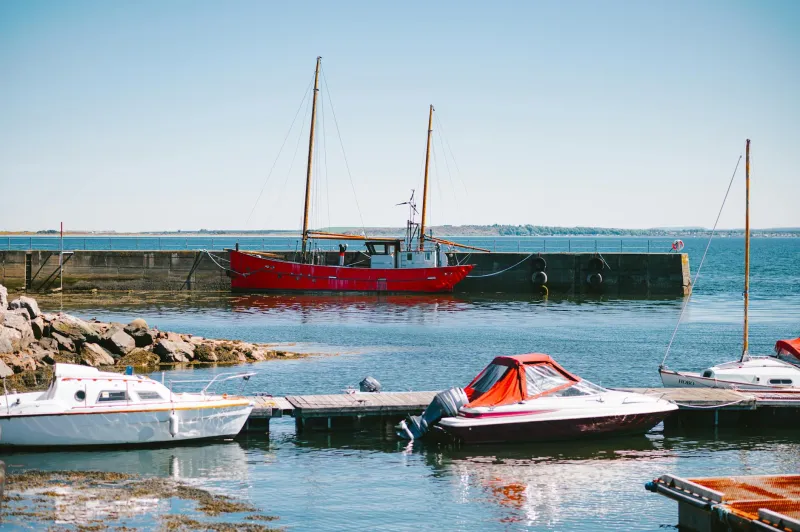
Stand on any North Sea harbour wall from Yarmouth to Aberdeen, and you'll see the empty spaces where Britain's great herring fleets once moored. These weren't small operations — at their peak in the early 20th century, over 1,000 drifters worked the silver shoals, their nets stretching like underwater curtains across miles of sea. The herring trade employed entire communities: fishermen, coopers, gutting girls, merchants, and the countless families whose livelihoods depended on the annual migration of these shimmering fish.
Then, almost overnight, it was gone.
"People think herring disappeared because we overfished them," explains John MacLeod, one of the few remaining traditional herring fishermen working out of Mallaig. "But that's only half the story. The real tragedy is how quickly we forgot everything our grandfathers knew about working with the sea."
When Silver Turned to Silence
The collapse came in stages. First, the massive industrial trawlers of the 1960s and 70s depleted stocks faster than they could recover. Then changing ocean temperatures disrupted the herring's traditional migration patterns. By the 1980s, most herring fisheries were closed, and an entire way of life had vanished.
But herring stocks have recovered dramatically over the past two decades. Marine biologists now record healthy populations throughout British waters. The fish are back — it's the knowledge and infrastructure to catch and cure them sustainably that we've lost.
Dr. Sarah Whitfield, who studies traditional fishing methods at the Marine Conservation Society, puts it bluntly: "We threw away centuries of accumulated wisdom about seasonal fishing, proper curing, and working with natural cycles. Now we're having to relearn what our great-grandparents knew instinctively."
Masters of the Cure
In Craster, Northumberland, Neil Robson represents the fourth generation of his family to smoke herring over oak and beech fires. His small smokehouse — one of only three traditional herring curers left in England — processes perhaps 200 fish on a busy day. A century ago, his great-grandfather's operation handled 10,000.
"The old methods weren't just about preservation," Robson explains, turning golden kippers in the amber smoke. "They were about creating flavour. Each curer had their own blend of woods, their own timing, their own salt mix. We weren't just making food — we were making tradition."
Robson's kippers command premium prices from London restaurants and artisan food shops, but he struggles to find young people willing to learn the trade. The work is physical, the hours are dictated by tides and weather, and the skills take years to master.
The New Herring Hunters
Yet across Britain's coasts, a new generation is taking up the challenge. In Scotland's Western Isles, the community-owned MV Pioneer uses traditional drift nets to catch herring sustainably, selling directly to local restaurants and farmers' markets. Their methods mirror those used for centuries — small boats, selective gear, and intimate knowledge of local waters.
"We're not trying to recreate the past exactly," says skipper Calum Morrison. "We're taking the best of traditional knowledge and combining it with modern understanding of fish stocks and marine ecology. It's about finding a balance."
Similar initiatives are emerging from Cornwall to Orkney. Young fishermen are learning forgotten techniques from elderly mentors. Chefs are rediscovering the distinct flavours of properly cured British herring. Food historians are documenting traditional recipes and preservation methods before they disappear entirely.
From Street Food to Slow Food
Perhaps most remarkably, herring is finding new audiences among Britain's growing slow food movement. Restaurants like London's St. John and Edinburgh's The Scran & Scallie feature traditional herring preparations alongside modern interpretations. Home cooks are experimenting with rollmops, soused herring, and regional specialities like Yarmouth bloaters.
"Herring was Britain's original sustainable seafood," argues food writer Mark Hix, whose restaurants champion British coastal cuisine. "High in omega-3s, abundant in our waters, and with a carbon footprint a fraction of imported salmon. We've been looking for sustainable protein sources while ignoring one that's been swimming right off our shores."
The Tides of Change
The revival faces real challenges. Consumer tastes have shifted away from strong-flavoured, bony fish. Young fishermen often prefer more lucrative catches like crab and langoustine. The infrastructure for processing and distributing herring has largely disappeared.
But the signs are encouraging. Marine conservation groups report that sustainable herring fishing could support hundreds of small boats while maintaining healthy stocks. Traditional food festivals increasingly feature herring specialities. Even supermarkets are beginning to stock British-caught, traditionally cured herring alongside their imported alternatives.
"This isn't about nostalgia," insists MacLeod, mending nets in his harbour workshop. "It's about remembering that the sea gave us everything we needed, if we were wise enough to work with it rather than against it. The herring are back. Now it's up to us to prove we've learned from our mistakes."
Standing on those same harbour walls today, you might catch glimpses of silver in the water — herring returning to their ancient routes. Whether Britain's coastal communities will be ready to welcome them back remains the great question of our maritime future.