Tide, Time, and Tradition: Britain's Mudflat Guardians Restore the Native Oyster's Ancient Realm
When London Ran on Oyster Shells
In Victorian Britain, you could buy a dozen native oysters for less than a pint of beer. Street vendors hawked them from barrows on every corner. Workers broke their fast with oyster stew, and the shells — mountains of them — were ground up to surface roads and strengthen mortar. The Thames alone supported over 700 million oysters across beds stretching from Gravesend to Southend.
Today, finding a single native oyster in those same waters requires the dedication of marine archaeologists and the patience of saints.
"People assume oysters were always luxury food," says Emma Foster, who manages native oyster restoration for the Essex Wildlife Trust. "But they were working-class protein. Cheap, abundant, and available year-round. They were literally the foundation of British coastal food culture."
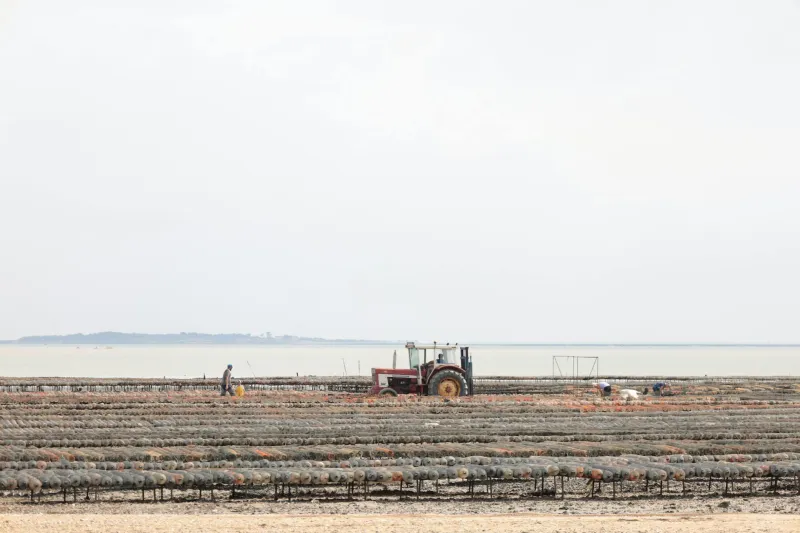
Standing knee-deep in Mersea Island's mudflats at dawn, Foster represents a new generation of marine farmers working to restore what was once Britain's most important fishery. It's painstaking work that requires equal parts marine biology, historical research, and sheer bloody-mindedness.
 Photo: Mersea Island, via c8.alamy.com
The Great Collapse
The decline began in the 1880s with overharvesting, accelerated through pollution and disease, and reached its nadir in the 1970s when the last commercial native oyster beds closed. Unlike their Pacific cousins — the plump, fast-growing imports that dominate today's market — Britain's native oysters (Ostrea edulis) grow slowly, reproduce late, and demand pristine water conditions.
"Native oysters are the old-growth forests of the sea," explains Dr. James Wright, a marine ecologist studying oyster restoration. "They create complex reef systems that support dozens of other species. When we lost the oyster beds, we lost entire underwater ecosystems."
The ecological impact was staggering. Native oysters filter enormous volumes of water — a single adult can process 50 gallons daily. The Thames beds once filtered the entire estuary every few weeks, maintaining water clarity and supporting rich marine life. Their disappearance contributed directly to the murky, depleted waters we see today.
Mudlark Pioneers
On the Blackwater Estuary in Essex, Richard Haward continues a family oyster business dating to 1792. His great-grandfather worked beds thick with natives; Richard now tends carefully managed plots where every oyster is precious.
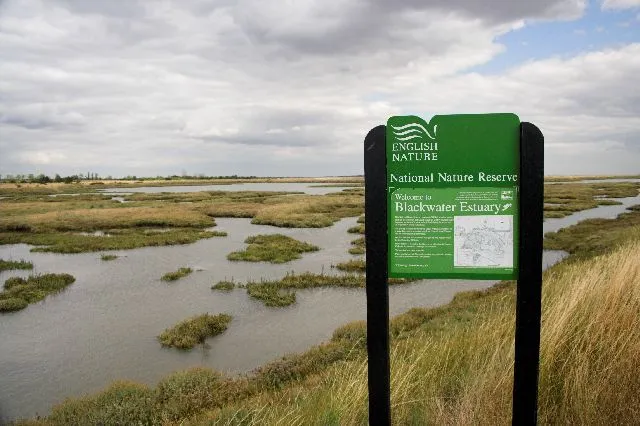 Photo: Blackwater Estuary, via s0.geograph.org.uk
"We're not just growing oysters," he explains, checking experimental native beds at low tide. "We're rebuilding habitat. Each native oyster we establish creates space for dozens of other species — sea anemones, crabs, fish nurseries. It's like underwater rewilding."
Haward's operation combines traditional knowledge with cutting-edge marine science. He works with university researchers to identify disease-resistant native strains, tests new cultivation methods, and mentors young marine farmers. His oysters take five to seven years to reach market size — a lifetime compared to Pacific oysters' two years — but their complex, mineral-rich flavour commands premium prices from discerning chefs.
The Restoration Revolution
Across Britain's estuaries, similar projects are taking root. In Loch Ryan, Scotland, community groups work with marine biologists to reestablish native beds using oysters descended from ancient Scottish stocks. The Solent Oyster Restoration Project has returned natives to Hampshire waters for the first time in decades. Even the Thames — once written off as too polluted — now hosts experimental native oyster trials.
The work requires extraordinary patience. Native oysters reproduce slowly and irregularly. Water quality must be monitored constantly. Predators like starfish and crabs can devastate young beds overnight. Winter storms can scatter years of careful cultivation.
"You're working on geological time scales," admits Dr. Ceri Lewis, who leads native oyster research at the University of Exeter. "But when it works — when you see a bed establishing itself, supporting marine life, improving water quality — you understand why these creatures shaped our coastlines for millennia."
Flavours of Place
For chefs like Nathan Outlaw, whose Cornwall restaurants champion local seafood, native oysters represent something Pacific varieties can never match: true terroir.
"A Whitstable native tastes completely different from a Carlingford or a Helford," he explains. "They express their environment — the salinity, the minerals, the microscopic life of their specific waters. Pacific oysters taste the same whether they're grown in Dorset or France."
Outlaw sources natives from the handful of remaining producers, featuring them prominently during the traditional 'R' months when they're at their peak. His customers — many tasting natives for the first time — often express surprise at their complexity compared to the creamy blandness of Pacific oysters.
Ancient Wisdom, Modern Methods
At the Duchy of Cornwall Oyster Farm, manager John Holmyard combines traditional cultivation methods with modern selective breeding. His natives grow in areas that have supported oyster beds since Roman times, using techniques refined over centuries.
"The Victorians understood oyster farming better than we do in many ways," Holmyard reflects, sorting juvenile natives in his shore-side facility. "They knew which tides to work, how to read water conditions, when to move stock. We're relearning that knowledge while adding modern understanding of genetics and marine ecology."
Holmyard's operation focuses on developing hardier native strains that can better resist disease and environmental stress. It's slow work — each breeding cycle takes years — but essential for establishing self-sustaining populations.
The Long Tide Home
The native oyster's return faces significant challenges. Climate change alters ocean chemistry and temperature. Coastal development reduces suitable habitat. Consumer preference leans toward cheaper, more predictable Pacific oysters.
Yet the restoration movement grows stronger each year. Marine conservation organisations recognise native oysters as a keystone species whose return could transform coastal ecosystems. Restaurants increasingly feature them as symbols of British culinary heritage. Young marine farmers see opportunity in serving discerning markets willing to pay for authenticity and environmental stewardship.
"We're not trying to recreate Victorian abundance overnight," says Foster, watching the tide return to Mersea's mudflats. "We're planting seeds for future generations. Every native bed we establish, every juvenile that survives to breeding age, brings us closer to restoring something we should never have lost."
As the morning sun burns off the estuary mist, revealing the careful patterns of Foster's restoration plots, the ancient rhythm of tide and cultivation continues. Somewhere in the mud and saltwater, Britain's oldest seafood tradition is slowly, patiently, finding its way home.