Where Waters Shape Wisdom: Five Rivers That Define Britain's Angling Soul
Britain's rivers flow through more than landscape — they course through culture, carrying centuries of fishing tradition, local knowledge, and riverside customs that define how communities understand the relationship between rod, river, and table. From the wild borderlands where the Wye carves through ancient rock to the manicured chalkstreams of Hampshire, each great fishing river has developed its own dialect of angling, its own rhythm of seasons, and its own approach to celebrating the fish that swim beneath its surface.
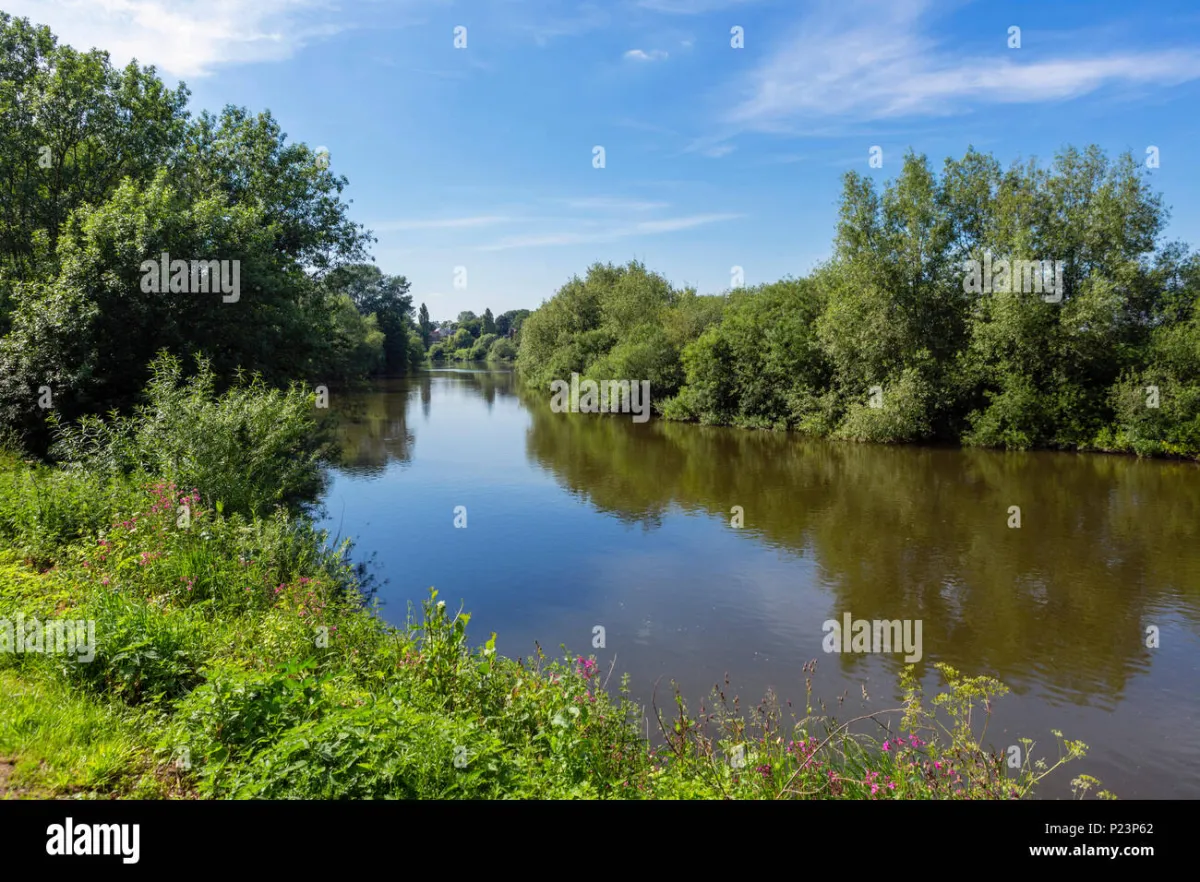 Photo: The Wye, via c8.alamy.com
The Wye: Where Wild Browns Run Free
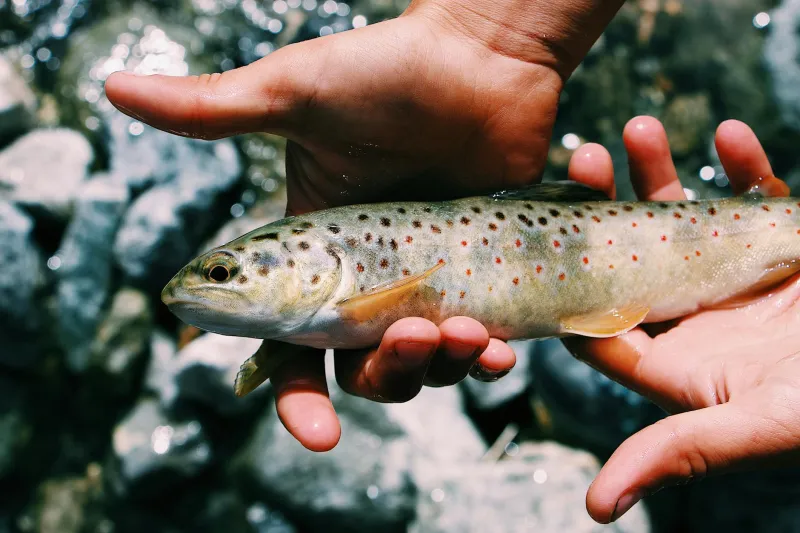
Rising in the Welsh mountains and meandering through some of Britain's most spectacular countryside, the Wye remains our last great wild trout river. Here, in pools shadowed by hanging woods and runs carved through red sandstone, brown trout still spawn naturally, feed wildly, and fight with a ferocity that reflects their untamed environment.
"Wye trout taste of the river itself," says Gareth Williams, whose family has guided on these waters for five generations. "Sweet water over clean gravel, mayflies and caddis, wild watercress and fresh air. You can taste it all."
The Wye's fishing culture centres around mobility and adaptability. Unlike the formal traditions of southern chalkstreams, Wye anglers move constantly, reading water, following hatches, adapting to conditions that change with every shower and spate. The traditional Wye fly — a simple pattern of red wool and cock hackle — reflects this pragmatic approach: effective, durable, and uncomplicated.
In riverside pubs from Builth Wells to Monmouth, the evening ritual remains unchanged: fresh trout grilled simply over oak coals, served with new potatoes and the first peas of summer. No elaborate sauces, no complex preparations — just fish that tastes of the wild water that raised it.
The Spey: Cathedral of Salmon Fishing
Faster and more powerful than any English river, the Spey carries the romance and tragedy of Atlantic salmon in its cold, clear currents. This is where the art of salmon fishing reached its highest expression, where the traditions of ghillie and laird, rod and reel, created a culture as formal and precise as any religious observance.
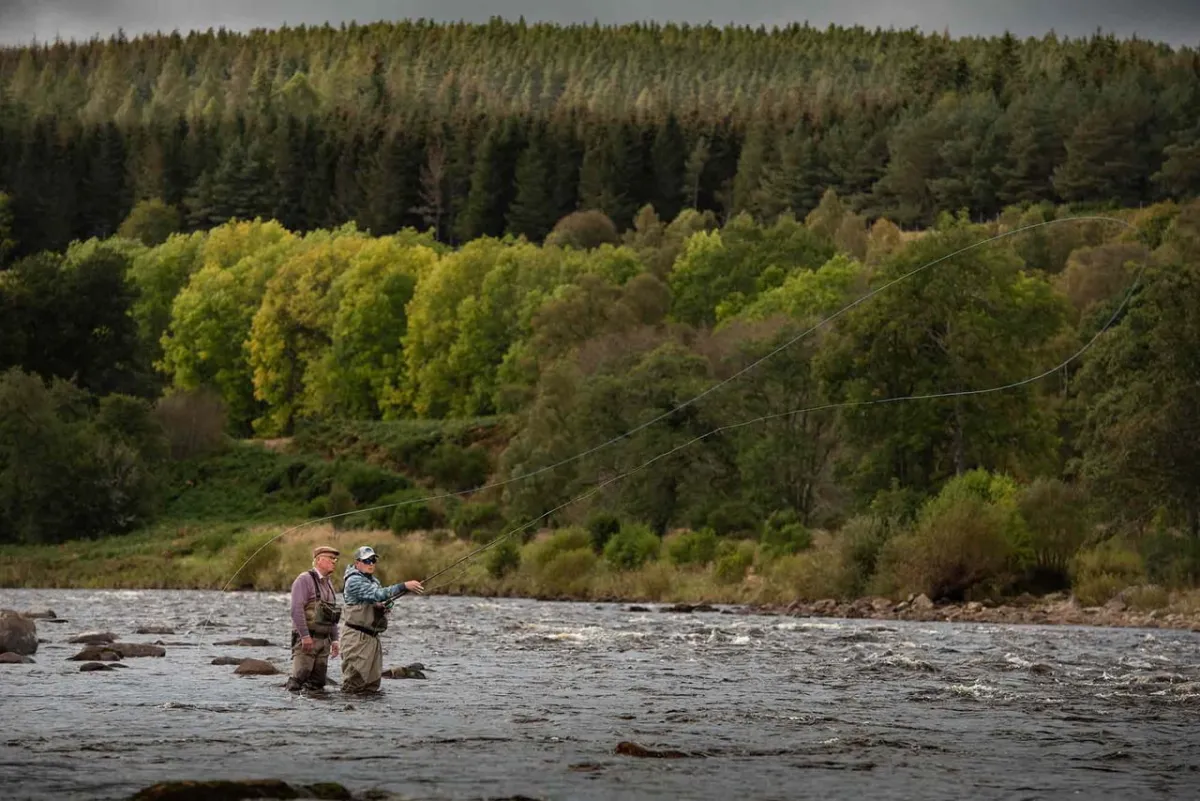 Photo: The Spey, via www.dowerhousenewtonmore.com
"The Spey teaches patience," reflects Donald MacKenzie, head ghillie at Tulchan Lodge. "You might cast all day for one fish, but when it comes, it's the fish of a lifetime."
The river's unique character — fast currents, large pools, and seasonal runs of salmon returning from Greenland waters — created the Spey cast, a technique that allows anglers to cover vast stretches of water without the back room needed for traditional casting. Watching a skilled Spey caster work a pool is like witnessing a dance between angler and river, line flowing in graceful loops that seem to defy physics.
Spey salmon, when they come to the table, are treated with reverence bordering on ceremony. The traditional preparation — poached whole in court bouillon, served cold with cucumber and mayonnaise — reflects the fish's status as the king of Scottish waters. Each salmon represents not just a meal but a connection to wild places, ancient migrations, and the mysterious pull that draws fish across oceans to return to the waters of their birth.
The Test: Perfection in Chalk and Current
If the Spey is salmon fishing's cathedral, the Test is its university. These crystal-clear Hampshire chalkstreams, fed by springs that filter through ancient chalk downs, create conditions so perfect for trout that they've become the template against which all other trout waters are measured.
 Photo: The Test, via flxt.tmsimg.com
The Test's influence on angling extends far beyond its banks. Here, the dry fly was perfected, the art of matching the hatch refined to a science, and the ethics of catch-and-release developed into a philosophy. The river's transparent water and educated trout demand precision that has shaped generations of anglers into students of entomology, hydraulics, and fish psychology.
"Test trout are scholars," observes Henry Gilbey, who has fished these waters for thirty years. "They've seen every fly, survived every season. To catch one, you need to think like they do."
The culinary tradition here reflects this precision. Test trout — when occasionally killed for the table — are prepared with the same attention to detail that characterises the fishing. Gently poached in white wine, served with samphire gathered from Hampshire's coast, accompanied by vegetables from the same chalk soil that feeds the river. Every element speaks to the purity of the water and the perfection of the ecosystem that creates such remarkable fish.
The Tay: Scotland's Mighty Salmon Highway
Broader and more powerful than the Spey, the Tay carries more water than any other British river, creating salmon fishing on an epic scale. Here, in pools that can swallow a cricket pitch and currents that could power mills, salmon fishing takes on an almost industrial character — not in method, but in the sheer scale of the enterprise.
The Tay's spring salmon — fish that enter fresh water in January and February — are among the finest that swim in British waters. Bright from the sea, thick with ocean feeding, they represent salmon fishing at its most exciting. The traditional Tay flies — massive, gaudy patterns like the Jock Scott and Durham Ranger — reflect the river's scale and the need to attract fish in water that can be coloured and powerful.
"Tay salmon fishing is about persistence and faith," says Ronnie Stewart, whose beats stretch for miles along the river's middle reaches. "The river's so big, the fish so scattered, that you're always fishing on hope. But when it comes together — when the water's right and the fish are running — there's nowhere else like it."
In the fishing lodges that dot the Tay's banks, salmon are celebrated with Highland ceremony. Whisky, oatcakes, and stories that grow larger with each telling. The fish themselves, when destined for the table, are often hot-smoked over oak and juniper, a preparation that concentrates their richness and creates a flavour that speaks to Scotland's ancient relationship with fire, smoke, and preservation.
The Lune: Lancashire's Hidden Gem
Less celebrated than its more famous cousins, the Lune flows through Lancashire's hill country carrying sea trout and salmon that many consider the finest in England. Here, in pools carved through limestone and runs that dance between fell and meadow, a quieter but equally passionate fishing culture has developed around pursuing fish that are as wild and unpredictable as the weather that sweeps down from the Pennines.
The Lune's sea trout — silver bars of muscle that enter fresh water on summer nights — create fishing that's part hunting, part poetry. Night fishing by moonlight, wading in darkness, casting by sound and instinct rather than sight. It's angling stripped to its essentials: angler, fish, and the mysterious pull that draws both to the same stretch of water.
"Lune sea trout don't follow rules," laughs Margaret Fishwick, one of the few women to hold a night fishing permit on the river's most famous beats. "They come when they want, feed where they choose. All you can do is be there when they decide to play."
The traditional preparation for Lune sea trout reflects this unpredictability. Cooked over driftwood fires on the riverbank, seasoned with wild garlic and watercress gathered from the water's edge, eaten while the fish is still warm and the night air still carries the sound of water over stone. It's fishing and cooking reduced to their most elemental forms — fire, fish, and the satisfaction of a connection made in darkness.
Rivers as Teachers
What unites these five rivers is their role as teachers. Each has shaped the anglers who fish them, creating distinct approaches to reading water, understanding fish behaviour, and celebrating the connection between angler and quarry. The Wye teaches adaptability, the Spey patience, the Test precision, the Tay faith, and the Lune humility.
Together, they represent the diversity of British fishing culture — from the formal traditions of southern chalkstreams to the wild freedom of Welsh rivers, from the Highland ceremony of Scottish salmon fishing to the midnight mysteries of northern sea trout. Each river carries its own stories, its own rhythms, its own way of connecting those who fish them to something larger than themselves.
As angling faces pressures from climate change, pollution, and development, these rivers and their traditions become more precious. They remind us that fishing is about more than catching fish — it's about understanding place, respecting tradition, and maintaining connections to wild waters that have shaped British culture for centuries. In their currents flow not just fish, but the accumulated wisdom of generations who learned to read water, weather, and the mysterious movements of creatures that live between two worlds.