When History Meets the Plate
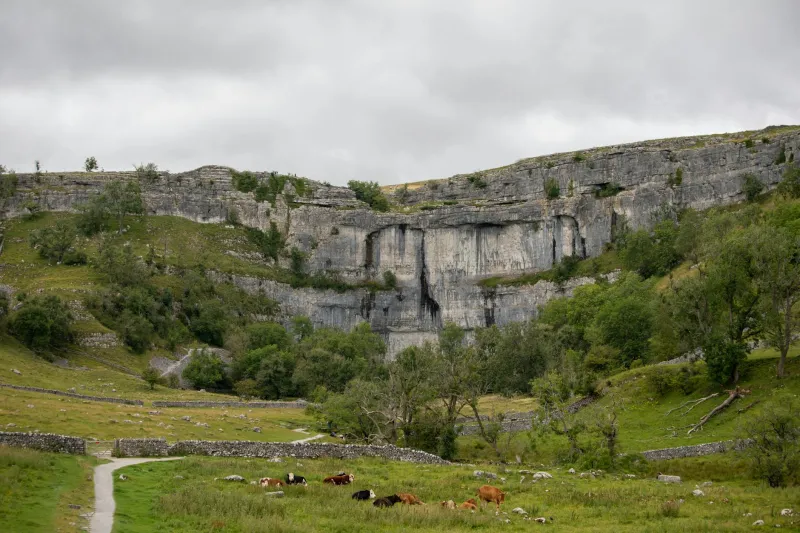
In a tucked-away corner of Somerset, Emma Hartwell walks across what might be Britain's most biodiverse pasture. Beneath her boots, thirty-seven species of wildflower carpet the ancient turf—yellow rattle, meadow buttercup, and ox-eye daisy creating a tapestry that hasn't changed much since the Domesday Book was written.
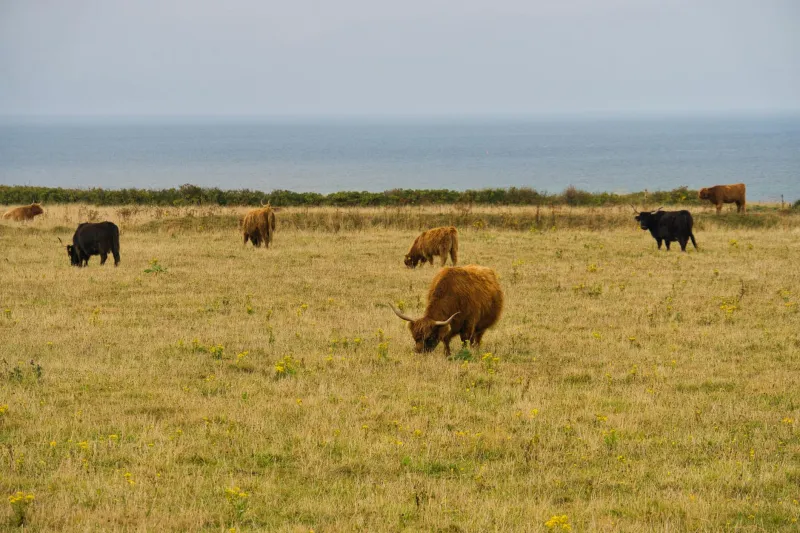
This is Cricklade's last surviving Lammas meadow, and the cattle grazing here produce milk that's caught the attention of some of Britain's most discerning chefs. The secret isn't modern farming techniques or expensive supplements—it's a system of land management that predates the Norman Conquest.
Rights Written in Stone
Lammas meadows operate on a principle as old as England itself. From Candlemas (February 2nd) until Lammas Day (August 1st), these fields are closed to livestock, allowing wildflowers and grasses to grow, set seed, and be harvested for hay. After Lammas, local farmers exercise ancient "aftermath" rights, turning their cattle onto the stubble to graze until the cycle begins anew.
"It's democracy in action," explains agricultural historian Dr. Margaret Thornton, who's spent two decades documenting these vanishing landscapes. "Every farmer with rights gets equal access, regardless of the size of their herd. The system forces cooperation and prevents overgrazing."
Once, thousands of these meadows stretched across England's river valleys. Today, fewer than 200 survive, scattered from the Thames Valley to the Yorkshire Dales. Each represents not just agricultural heritage, but an ecosystem that industrial farming destroyed elsewhere.
The Botanical Buffet
What makes Lammas cattle special isn't just the romantic backstory—it's the extraordinary diversity of their diet. Modern ryegrass leys might feed livestock efficiently, but they're botanical deserts compared to these ancient pastures.
"Our cows graze on plants that disappeared from most farms generations ago," says Tom Wickham, whose family has held Lammas rights in Oxfordshire since the 1600s. "Bird's-foot trefoil, kidney vetch, devil's-bit scabious—each adds something different to the milk."
The science backs up what farmers have long suspected. Research at Reading University found that milk from cattle grazing species-rich grassland contains significantly higher levels of beneficial fatty acids and antioxidants. The complex plant chemistry translates directly into more complex flavours.
From Meadow to Michelin
London's top restaurants are taking notice. At Sketch, head chef Pierre Gagnaire sources beef exclusively from Lammas-grazed herds. "The meat has a depth of flavour I cannot achieve with conventional suppliers," he explains. "There are mineral notes, almost floral undertones—it tastes of the landscape itself."
The trend extends beyond fine dining. Artisan cheesemakers like Sarah Appleby of Wookey Hole Cheese Company have built their reputation on Lammas meadow milk. Her aged cheddar, made from the milk of cattle grazing ancient Somerset meadows, commands premium prices at Borough Market.
"Customers can taste the difference immediately," Appleby notes. "There's a complexity that comes from biodiversity—you simply cannot replicate it in a laboratory."
Conservation Through Consumption
The revival of interest in Lammas produce is arriving just in time. Climate change and agricultural intensification threaten the remaining meadows, while ancient commoner rights face legal challenges as land values soar.
The Lammas Meadows Trust, established three years ago, works with farmers to maintain traditional management whilst developing premium markets for their produce. "Conservation through consumption," as director James Pemberton puts it. "If we can make these meadows profitable, we can save them."
The trust has helped establish direct supply chains between Lammas farmers and high-end restaurants, cutting out middlemen and ensuring premiums reach those maintaining the landscapes. Early results are encouraging—three meadows in Wiltshire that faced abandonment now have waiting lists of chefs eager to source their beef.
Ancient Wisdom, Modern Science
What's remarkable is how closely traditional Lammas management aligns with cutting-edge conservation science. The six-month grazing prohibition allows plants to complete their life cycles, maintaining genetic diversity that centuries of selective breeding couldn't achieve. The aftermath grazing creates the mosaic of heights and textures that support everything from ground-nesting birds to rare butterflies.
"Medieval farmers got it right by accident," observes Dr. Thornton. "They created a system that maximised both productivity and biodiversity—something modern agriculture is only just learning to value."
The Future of Flavour
As Brexit reshapes British agriculture and consumers increasingly seek authentic, traceable food, Lammas meadows offer a uniquely British solution. These aren't museum pieces, but working landscapes that could inform how we farm in the future.
The European Union's Common Agricultural Policy never quite knew what to do with Lammas rights—they didn't fit neat subsidy categories. Post-Brexit environmental schemes, however, are beginning to recognise their value, offering payments that reflect both biodiversity and cultural heritage.
"We're not trying to turn back the clock," insists Emma Hartwell, watching her cattle graze Somerset's flower-rich turf. "We're proving that the oldest farming systems can produce the most modern flavours."
In a world of industrial agriculture and globalised food chains, Britain's last Lammas meadows offer something increasingly rare: the authentic taste of place, rooted in soil and season, shaped by centuries of careful stewardship. For those lucky enough to taste their produce, it's a reminder that the most innovative farming might just be the oldest.