The Hidden Treasure
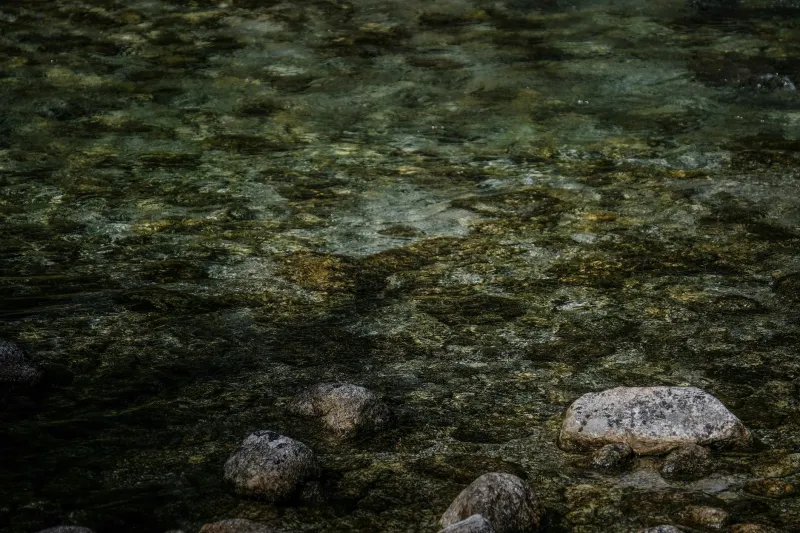
Stand beside the River Test on a crisp October morning, and you'll witness something approaching perfection. Crystal-clear water bubbles from chalk aquifers deep underground, maintaining a constant temperature year-round. Watercress beds line the banks, wild trout dart between trailing fronds of river crowfoot, and the entire ecosystem hums with an vitality that seems almost prehistoric.
This is Britain's secret: we're custodians of roughly 85% of the world's chalk streams, yet ask your local fishmonger about chalk stream trout and you'll likely be met with a blank stare.
"It's the great paradox of British fishing," sighs Peter Hartwell, who's been guiding fly fishers on Hampshire's chalk streams for thirty years. "We've got the finest trout waters in the world, but try finding their fish in Tesco."
The Geography of Excellence
Chalk streams represent nature's masterpiece of water filtration. Rainwater percolates through porous chalk bedrock for decades, emerging as springs of remarkable purity. The constant temperature—around 10°C year-round—creates perfect conditions for both wild trout and the invertebrates they feed upon.
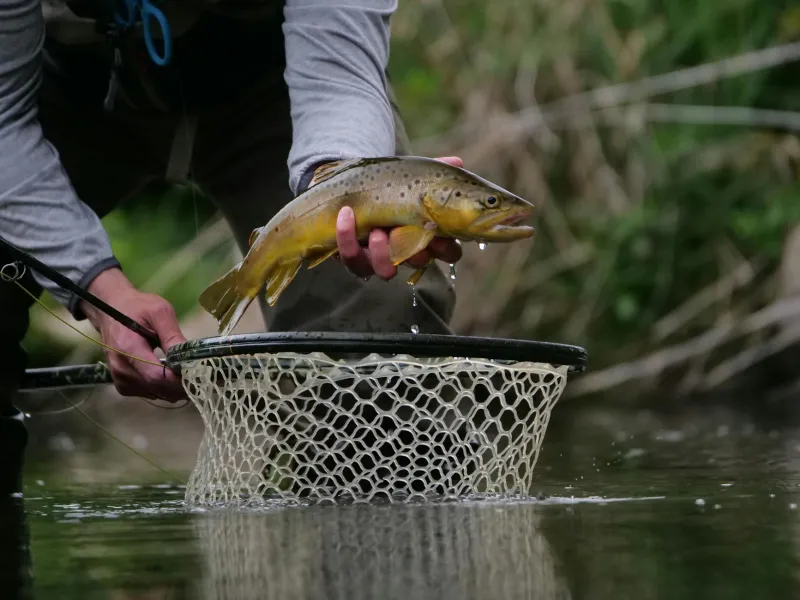
From Hampshire's Test and Itchen to Yorkshire's chalk streams near Driffield, these waterways produce fish of exceptional quality. Wild brown trout from chalk streams develop firm, pale flesh with a delicate flavour that reflects their pristine environment. Yet despite this natural advantage, British consumers remain largely ignorant of their existence.
"The irony isn't lost on us," admits Nick Measham, who manages a small trout farm on a tributary of the River Kennet. "Japanese buyers would pay premium prices for our fish, but we can't even get local restaurants interested."
The Supply Chain Puzzle
The disconnect between chalk stream quality and market availability reveals deep structural problems in British food distribution. Unlike Scotland's well-established salmon industry, chalk stream trout production remains fragmented across dozens of small operations, each serving hyper-local markets.
"Scale is everything in modern food retail," explains Margaret Foster, who owns Fordingbridge Fishery in the New Forest. "Supermarket buyers want consistent volumes, standardised sizes, predictable delivery schedules. We're talking about wild fish from natural systems—the antithesis of industrial food production."
Foster's operation exemplifies the challenge. Her spring-fed ponds produce roughly 2,000 trout annually, each fish taking two years to reach market weight. Compare this to intensive rainbow trout farms that can produce ten times that volume in half the time, and the economic pressures become clear.
Most chalk stream trout never leaves its immediate vicinity. Local pub kitchens, farm shops, and the occasional country house hotel absorb the limited supply. What remains goes to a handful of London restaurants with chefs committed to sourcing exceptional British ingredients.
The Keeper's Perspective
River keepers—the men and women who maintain chalk stream health—witness this waste of potential daily. Their work preserves habitat not just for wild fish, but for the broader ecosystem that makes these waters so special.
"Every morning, I'm looking at fish that represent hundreds of years of evolution in perfect habitat," reflects David Matthews, head keeper on a private stretch of the River Wylye in Wiltshire. "Yet anglers are often the only ones who ever taste them."
Matthews maintains three miles of river for a syndicate of fly fishers who travel from across Europe to experience British chalk stream fishing. The irony strikes him regularly: foreign visitors prize what local consumers ignore.
"French and German anglers understand immediately what they're experiencing," he notes. "They ask constantly about buying our fish commercially. Meanwhile, the village pub down the road serves farmed salmon from Scotland."
The Independent Advantage
A handful of independent fishmongers buck the trend, sourcing directly from chalk stream producers despite the logistical challenges. Andy's Fish Shop in Winchester has built relationships with three local trout farms, offering customers fish caught within twenty miles of the city.
"It requires completely different thinking," owner Andy Pritchard explains. "Instead of ordering from a catalogue, I'm phoning farmers to see what they've got available. Customers need educating about seasonal availability, about why these fish cost more than supermarket alternatives."
Pritchard's customers, once converted, become evangelical about chalk stream trout. The firm texture, clean flavour, and connection to local landscape create loyalty impossible to achieve with imported alternatives.
"When people understand they're buying fish from the same rivers their grandparents fished, from waters that have flowed pure for centuries, price becomes secondary," he observes.
The Restaurant Reality
Chefs represent another potential bridge between chalk stream producers and British consumers, yet uptake remains frustratingly limited. Even restaurants in chalk stream heartlands often overlook local fish in favour of more predictable supplies.
"Consistency kills creativity," argues Tom Williams, head chef at The George Hotel in Hatherden, Hampshire. "Yes, it's easier to order standard portions from a national supplier. But when I can get day-boat Test trout, the whole menu changes. Guests taste the difference immediately."
Williams sources from two local producers, adjusting his menu based on availability. This flexibility—anathema to chain restaurants—allows him to showcase ingredients at their peak.
"Last week, I served wild Test trout with watercress from the same riverbank and hazelnuts from nearby woodland," he recalls. "That's not just a dish; it's a landscape on a plate."
The Path to Your Plate
So what would it take to bring chalk stream trout to more British tables? The answer lies not in scaling up individual operations, but in creating networks that preserve artisanal quality while achieving broader distribution.
"We need a model like French AOC systems," suggests Dr. Sarah Jenkins, who studies sustainable aquaculture at Southampton University. "Chalk stream trout deserves protected designation, premium pricing, and marketing that celebrates its uniqueness."
Several producers are experimenting with direct sales, using online platforms to reach customers beyond their immediate area. The pandemic accelerated this trend, as consumers sought local food sources and producers needed new revenue streams.
"COVID taught us that people will pay for quality and provenance," notes Foster from Fordingbridge Fishery. "We started home delivery during lockdown and discovered customers across southern England hungry for genuinely local fish."
Beyond the Plate
The chalk stream trout story reflects broader challenges in British food culture. Despite our island geography and fishing heritage, we've become surprisingly disconnected from local waters. Supermarket convenience has replaced seasonal eating, while industrial agriculture has marginalised traditional producers.
Yet signs of change emerge across the countryside. Young chefs increasingly champion local ingredients, consumers show growing interest in food provenance, and environmental concerns drive demand for sustainable alternatives.
"The next generation gets it," observes Hartwell, the Hampshire fishing guide. "They understand that eating local fish supports local ecosystems, preserves traditional skills, and tastes better than anything shipped thousands of miles."
The Clear Choice
Back on the Test, morning light filters through the crystal water, illuminating a wild brown trout as it rises to take an emerging mayfly. This fish embodies everything exceptional about British food production: heritage, sustainability, quality, and connection to place.
Whether it ever reaches a British plate depends on choices we make as consumers, chefs, and custodians of our food culture. The streams flow clear and constant, the fish remain exceptional, and the potential for genuine food sustainability runs as deep as the chalk aquifers themselves.
We need only choose to taste what we've been taking for granted.