Cracking the Code: Britain's Ancient Nut Groves Rise from Forgotten Ground
The morning mist clings to ancient branches as David Wickham walks between rows of gnarled hazel trees, their twisted limbs heavy with clusters of green nuts slowly ripening in the September sun. Here in the heart of Kent's Weald, his family's cobnut plat represents something increasingly rare in modern Britain – a direct link to a food tradition that once sustained entire rural communities.
"My grandfather would turn in his grave if he saw how we've forgotten the hazel," Wickham says, running weathered hands along bark that's seen two centuries of careful tending. "These trees fed our villages when wheat failed, kept families going through lean winters, and supported every creature from dormice to river trout."
The Forgotten Harvest
Once upon a time, every British farming community knew the rhythm of the nut harvest. From the Scottish Highlands to the Devon valleys, managed hazel groves – known locally as plats – dotted the countryside like green jewels. These weren't wild woodlands but carefully cultivated orchards, where varieties like Kentish Cobs and Filberts were grown with the same precision as any other crop.
The autumn gathering was a community affair. Families would spend October days filling wicker baskets, children scrambling up ladders while adults worked the lower branches. The nuts would be dried in special lofts, stored in granaries, and traded at market towns throughout the winter months.
But perhaps more importantly, these groves served as vital wildlife corridors. The fallen nuts fed everything from wood pigeons to wild boar, while the seasonal flooding of riverside plats created rich feeding grounds for salmon and trout returning from the sea.
Where Ancient Ways Meet Modern Plates
Today, only a handful of commercial nut groves survive in Britain, clustered mainly around Kent's traditional growing areas. Yet something remarkable is happening in these forgotten corners of the countryside. A new generation of food lovers is discovering what their ancestors knew – that British-grown nuts possess a depth of flavour that imported varieties simply cannot match.
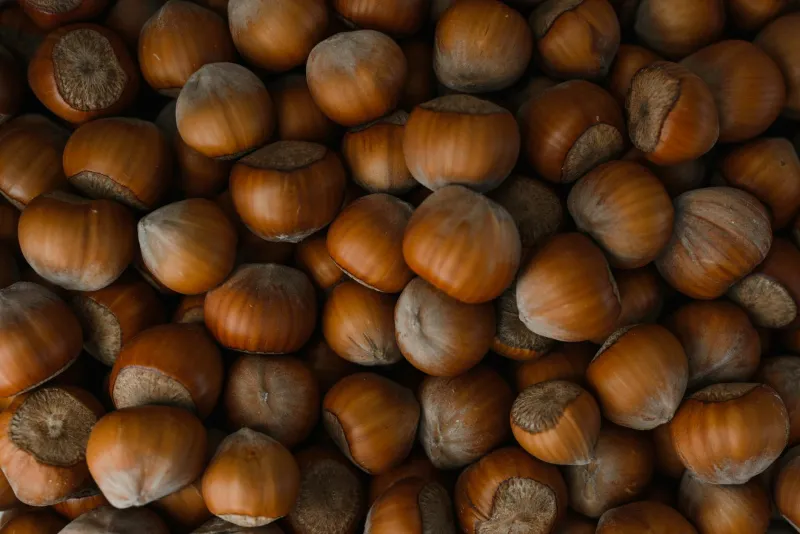
Sarah Mitchell, whose family has worked the same Sussex hazel grove for four generations, has watched this renaissance unfold from her drying sheds. "Twenty years ago, we were selling to the same local families who'd bought from my grandmother," she explains, cracking open a fresh cobnut to reveal the creamy white kernel inside. "Now we've got Michelin-starred chefs driving down from London, artisan chocolatiers queuing up for our harvest, and foraging courses teaching people what their great-grandparents took for granted."
The revival isn't just about nostalgia. British cobnuts, harvested young and eaten fresh, offer a delicate sweetness that's worlds apart from the imported hazelnuts found in supermarkets. When properly stored, they develop complex, almost wine-like notes that have caught the attention of Britain's most innovative chefs.
Rebuilding the Web
Beyond the kitchen, these restored groves are proving their worth as ecological powerhouses. Modern research has revealed the sophisticated relationship between hazel cultivation and river health that our ancestors understood instinctively.
Dr. Emma Thornley, an ecologist studying traditional land use in the South Downs, explains the connection: "These old nut groves weren't just about feeding people – they were integrated food systems. The leaf litter creates perfect spawning beds for trout, the nuts support entire food webs, and the coppiced wood provided materials for everything from fishing traps to cattle hurdles."
This integration is being recreated on farms across southern England, where forward-thinking landowners are planting new hazel groves along riverbanks and field margins. The trees require minimal inputs, thrive in Britain's climate, and provide habitat for species that have struggled to survive in intensive agricultural landscapes.
The Quiet Revolutionaries
Back in Kent, Wickham is part of a small but determined network of growers working to secure the future of British nuts. They share knowledge through informal networks, swap rare varieties, and collectively market their harvests to an increasingly enthusiastic audience.
"It's not about going backwards," he insists, watching a red squirrel leap between his trees – a sight that's become more common as the grove has matured. "It's about remembering what worked and applying it to today's challenges. These trees sequester carbon, support biodiversity, and produce food that travels metres rather than thousands of miles."
The numbers remain small – fewer than fifty commercial nut groves operate across Britain today. But each autumn, as the first cobnuts appear in farmers' markets and restaurant menus, the message spreads a little further. In a world increasingly concerned with food security and environmental sustainability, perhaps it's time to listen to the wisdom held in these ancient branches.
As Wickham loads the day's harvest into wooden crates, much as his grandfather did, he reflects on the future. "Every nut we crack open carries the story of this place – the soil, the seasons, the generations who tended these trees. That's something you can't import, and something we can't afford to lose."