The Butcher's Network: How Village Meat Shops Are Quietly Outflanking Industrial Agriculture
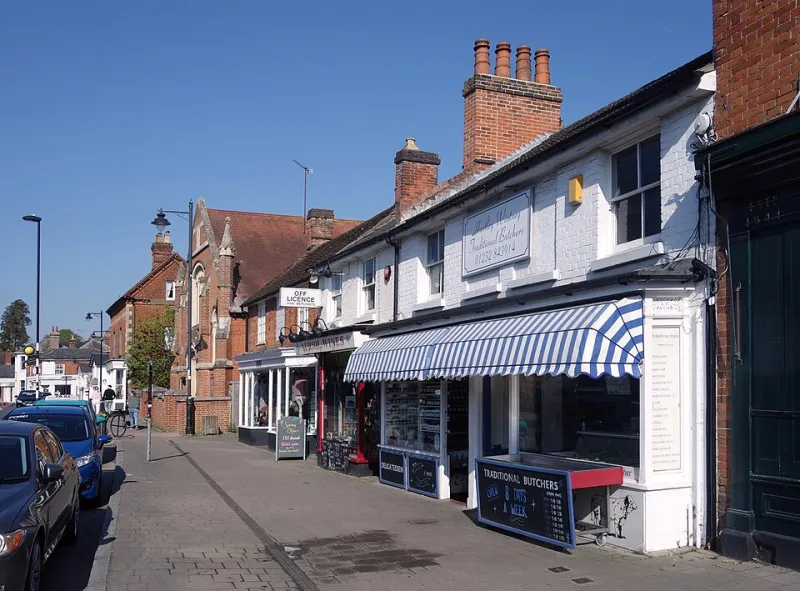
Photo: Des Blenkinsopp , CC BY-SA 2.0, via Wikimedia Commons
Walk into a good independent butcher's shop on a Tuesday morning and you'll likely find the owner doing three things at once: breaking down a carcass, answering a question about cooking times, and fielding a call from a farmer about next month's lambs. It's not glamorous. It doesn't photograph especially well. But what's happening in that conversation — between a butcher who knows his customers and a farmer who knows his animals — is something the entire industrial food chain has been trying to replicate for twenty years and still can't quite manage.
Britain's village butchers are having a moment, though they'd mostly be too modest to say so. After decades of attrition — supermarkets taking market share, high streets hollowing out, younger generations losing the habit of buying meat from a human being — the ones that survived have found themselves at the centre of a growing appetite for something different. Not artisan as a marketing word. Just meat that came from somewhere specific, from an animal with a breed and a farm attached to it, handled by someone who can tell you how to cook it.
The Supply Chain Nobody Talks About
What makes the best independent butchers genuinely interesting right now is not what's in the window — though a properly hung side of Dexter or a rack of Herdwick is a fine thing to look at — it's the supply arrangements that sit behind it. Over the past decade or so, a quiet network has grown up between small-scale farmers raising heritage and native breeds and the butchers willing to take whole or half carcasses direct, bypassing the auction system and the abattoir middlemen wherever possible.
These aren't formal arrangements. There are no contracts, no procurement departments, no compliance forms. It's more like the way farming communities have always worked — built on trust, handshakes, and the understanding that both parties need each other to survive. A butcher in North Yorkshire might take four Longhorn cattle a year from a farm ten miles away, knowing exactly how they were raised and on what pasture. A shop in rural Shropshire might have a standing arrangement with a local smallholder for a regular supply of Tamworth pork, supplemented by whatever the season and the sow produces.
"We know the farmers by name," says one butcher running a third-generation shop in a Cumbrian market town. "And the farmers know us. If something's not quite right — if an animal came in light, or the weather's been hard and the grazing wasn't what it should be — we know about it before the meat arrives. That's not something you get from a wholesaler's invoice."
The Breeds That Depend on Them
Heritage and native breeds are, by most commercial measures, awkward animals. They grow slowly. They finish at smaller weights than continental crosses. They don't produce the uniform portions that supermarket supply chains require. Their fat coverage is different, their muscle structure varies by breed, and the eating quality — the thing that actually matters — is often superior in ways that don't show up in a standard grading system.
For breeds like the Belted Galloway, the Red Poll, the Oxford Sandy and Black pig, or the Herdwick sheep, the village butcher is frequently the difference between commercial viability and extinction as a food animal. Without someone willing to take the whole animal, explain the cuts to customers, and charge a price that reflects the true cost of slow, low-density farming, the economics simply don't work for the small producer.
Several of the butchers we spoke to are quietly evangelical about this. One in rural Suffolk keeps a handwritten card next to each cut in the counter, noting the breed, the farm, and a line or two about what the animal was raised on. It sounds simple. It works. Customers who've bought a piece of Old Spot belly pork and cooked it properly tend to come back asking for it specifically.
Educating the Counter
There is, of course, an education element to all of this, and it's one the best butchers have embraced rather than resented. Many of their customers have grown up buying pre-packed supermarket meat with no particular attachment to breed or provenance. The idea that a Herdwick hogget has a different flavour from a commercial lamb — earthier, more mineral, with a depth that comes from grazing on fell grass and heather — is not obvious to someone who's never been given the chance to compare.
This is where the village butcher's greatest competitive advantage lies. It's not price — heritage breed meat raised slowly on good pasture will never be cheap, and it shouldn't be. It's the conversation. The ability to explain why a shin of aged Longhorn needs three hours in a low oven and will reward that patience in a way that a supermarket braising steak won't. The willingness to cut something to order, to recommend what's eating well this week, to tell you that the shoulder is better than the leg right now because of how the animal finished.
Holding the Line
None of this is without difficulty. The economics of independent retail are brutal. Rents, energy costs, and the ongoing pressure from online meat boxes — themselves a welcome development, but a competitor nonetheless — make life hard. Several butchers we spoke to are the last of their kind in their towns, carrying on after neighbouring shops closed, often working longer hours than they care to admit.
But there's a stubbornness to the best of them that feels very much in keeping with the farmers they work with. They're not trying to disrupt anything. They're not building a brand or pursuing a strategy. They're doing what their trade has always done — connecting the animal to the table through skill, knowledge, and a genuine relationship with the land and the people who work it.
For the heritage breeds that depend on them, that's not a small thing. It's the whole story.