The milk arrives still warm from the morning parlour, creamy and golden with a richness that speaks of ancient pastures and bloodlines stretching back centuries. In a converted barn in the Welsh borders, Sarah Jenkins ladels the precious liquid from her herd of English Longhorns into copper vats, beginning a process that connects her directly to Britain's lost dairy heritage.
"People think we're being romantic about old breeds," Sarah says, stirring the slowly warming milk. "But this isn't nostalgia—it's about flavour that you simply cannot replicate with commercial cattle."
The Genetics of Taste
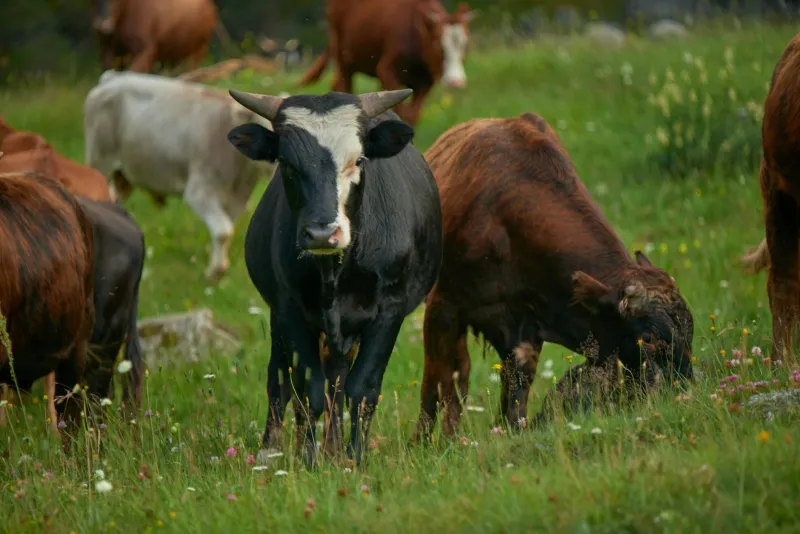
Sarah's sentiment echoes across a growing network of British cheesemakers who have turned their backs on the Holstein-Friesian herds that dominate our dairy landscape. Instead, they're working with native breeds that were commonplace on British farms just a century ago: the distinctive white-striped Longhorns, the compact black Dexters, and the russet-coated Red Polls that once grazed East Anglian commons.
The difference lies in more than mere breed characteristics. These heritage cattle process grass differently, their digestive systems evolved over millennia to extract maximum nutrition from Britain's variable pastures. The result is milk with a complexity of proteins and fats that translates directly into cheese with depth and character.
"A Red Poll cow gives you about half the milk volume of a modern Holstein," explains Tom Calver, who runs a small herd on the Suffolk-Norfolk border. "But the quality is incomparable. The protein structure is different, the fat globules are smaller, and the seasonal variation in the milk tells the story of what the cows are eating month by month."
Tom's cheeses reflect this intimacy with the land. His spring wheels, made when the cows first turn out onto fresh grass, have a bright, almost grassy tang. By autumn, when the animals are grazing aftermath and hedgerow herbs, the same recipe produces something altogether richer and more complex.
Pasture as Co-Creator
This seasonal variation is precisely what these cheesemakers celebrate rather than try to eliminate. Unlike industrial dairy operations that aim for consistency through controlled feeding and standardised genetics, the heritage breed producers embrace the way their cheese changes with the rhythm of the farming year.
In the Cotswolds, Marcus Webb manages his small herd of Gloucester cattle—a breed so rare it was nearly extinct just decades ago—on permanent pasture that hasn't seen a plough in living memory. The ancient turf supports dozens of plant species: ribwort plantain, bird's-foot trefoil, wild thyme, and countless others that contribute subtle flavour compounds to the milk.
"Industrial farming treats variation as a problem to be solved," Marcus observes, cutting into a wheel of his signature cheese. "We see it as the whole point. Why would you want cheese that tastes the same whether it's made in January or July?"
His cheese room holds wheels at different stages of maturation, each batch subtly different depending on when it was made. The winter cheeses, produced when his cows were eating hay cut from the same diverse pastures, have a concentrated, almost nutty character. Summer wheels are brighter, more floral, carrying echoes of the wildflower meadows where his cattle graze.
The Economics of Authenticity
This approach demands a complete rethink of dairy economics. Heritage breeds produce less milk, require more land per animal, and their cheese takes longer to mature. The finished product costs significantly more than mass-produced alternatives. Yet these producers are finding customers willing to pay premium prices for cheese that tells a genuine story of place.
"We're not competing with supermarket cheese," Sarah Jenkins explains. "We're offering something completely different—a direct connection to the landscape and the animals that created it."
The market seems ready for this authenticity. High-end restaurants increasingly feature these artisan cheeses on their boards, while farmers' markets see steady demand from consumers seeking alternatives to industrial food production. Online sales allow even the smallest producers to reach customers across Britain who understand the value of what they're creating.
Preserving Through Production
Perhaps most significantly, this movement is helping preserve genetic diversity that was rapidly disappearing from British agriculture. The Rare Breeds Survival Trust lists many native cattle breeds as vulnerable or at risk, their numbers declining as agriculture consolidated around a handful of high-yielding commercial types.
By creating viable businesses around heritage breeds, these cheesemakers provide economic justification for maintaining genetic diversity. Every wheel of Longhorn cheese or Red Poll butter represents a small act of conservation, keeping ancient bloodlines alive through productive use rather than museum preservation.
"These breeds evolved here over thousands of years," Tom Calver reflects. "They're perfectly adapted to our climate, our grass, our conditions. Using them to make cheese isn't looking backwards—it's about building a more resilient, more interesting food system for the future."
Beyond the Wheel
The influence of this movement extends beyond individual farms and cheese rooms. It's contributing to a broader conversation about food sovereignty, sustainability, and the relationship between agriculture and landscape. By demonstrating that small-scale, breed-specific production can be economically viable, these producers offer an alternative model for British farming.
As climate change and biodiversity loss challenge industrial agriculture, the principles these cheesemakers champion—genetic diversity, pasture-based systems, seasonal production—may prove less quaint tradition than essential strategy.
In Sarah Jenkins' cheese room, wheels of Longhorn cheese age slowly on wooden shelves, each one a small act of defiance against homogenisation. They represent not just exceptional food, but a different way of thinking about our relationship with the land that feeds us. In an age of global supply chains and standardised products, these cheeses taste unmistakably of home.